Most corporate videos in Kenya cost between KES 150,000 and KES 800,000 in 2026, while a broadcast TV commercial usually starts around KES 1.5 million. The price follows shoot days, crew size, cast, locations and post-production. Commercial shoots need a Kenya Film Classification Board (KFCB) filming licence, and drone shots need a KCAA-certified operator.
- Budget by shoot days and finished minutes, not by “a video”. One well-planned shoot day can feed a main film and several social cut-downs.
- The KFCB filming licence for a corporate video or advert is cheap and fast. Not having one on a public location is the expensive part.
- Drone footage must come from a registered drone flown by a certified operator. Ask for the paperwork.
- Agree in writing who owns the footage, the music rights and the release forms before you pay the deposit.
- What do video production companies in Kenya do?
- How much does video production cost in Kenya?
- Do you need a filming licence in Kenya?
- Can you film with a drone in Kenya?
- Who needs to sign what: music, people and footage?
- How long does a corporate video take?
- How to brief a video production company
- How do you choose a production company?
- Quick answers
What do video production companies in Kenya do?
A video production company takes a brief from idea to finished file: script, casting, locations, permits, crew, the shoot itself, editing, colour, sound and delivery in every format you need. The work buyers ask for most is corporate and company profile films, TV and digital commercials, documentaries for NGOs and foundations, event coverage and short social content.
Each kind of supplier suits a different job.
| Supplier | Best for | Watch out for |
|---|---|---|
| Freelance videographer | Event coverage, interviews, quick social clips, tight budgets | One person covering camera, sound and edit. Limited backup if they fall sick or a card fails. |
| Production house | Corporate films, documentaries, commercials with cast and crew | Creative concept may be thin if you arrive without one. Ask who writes the script. |
| Agency with in-house production | Campaigns where the video sits next to a launch, activation or event | Check that production is done by their own team, not resold with a mark-up you cannot see. |
| International crew | Global campaigns that need a specific director | They still need a Kenyan service company, KFCB licensing and immigration special passes. |
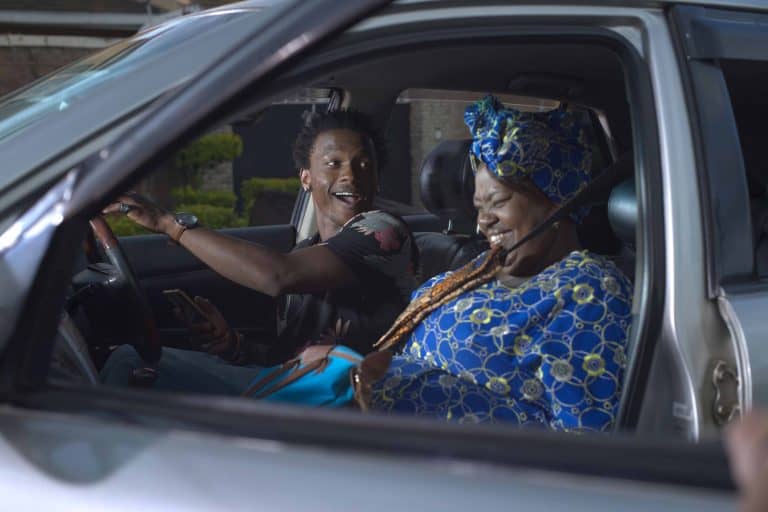
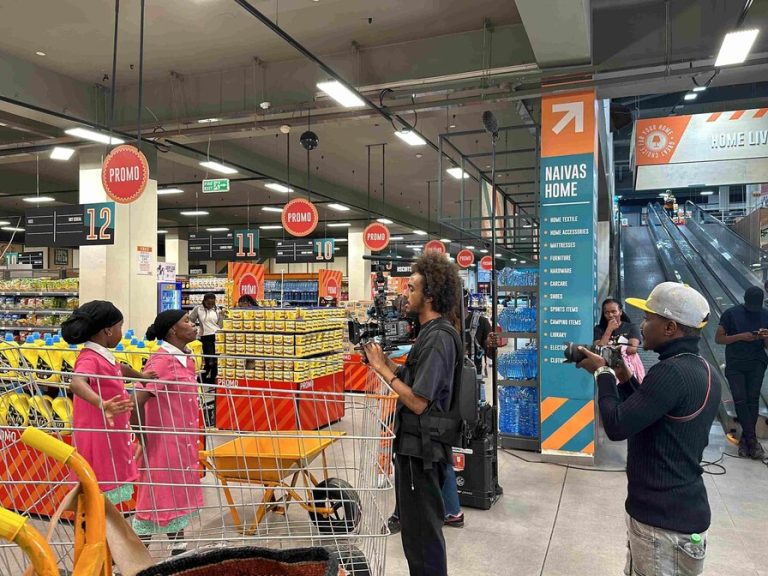
Red Giant Media sits in the third row. Our production work includes an ABSA commercial with Eliud Kipchoge, video production for ICEA Lion alongside its thematic brand launch, Lesso Lessons and a Naivas Kikapu Kibonge production. See our production services for the full scope.
How much does video production cost in Kenya?
Short social clips start from about KES 30,000, corporate and company profile films typically cost KES 150,000 to KES 800,000, and broadcast TV commercials usually start around KES 1.5 million. These are typical ranges we see in 2026, not fixed prices, so always ask for a written, itemised quote.
| Type of video | Typical range (KES, 2026) | What moves the price |
|---|---|---|
| Social clip or reel (15 to 60 seconds) | 30,000 to 150,000 | Number of versions, on-screen talent, motion graphics |
| Interview, testimonial or CEO message | 50,000 to 200,000 | Number of speakers, locations, second camera, subtitles |
| Event highlight video | 60,000 to 300,000 | Hours covered, camera count, same-day edit, livestream |
| Corporate or company profile film (2 to 4 minutes) | 150,000 to 800,000 | Shoot days, upcountry locations, drone, scripting, voiceover |
| Documentary (10 to 30 minutes) | 400,000 to 2,500,000+ | Research, travel days, archive footage, translation |
| TV or digital commercial (30 to 60 seconds) | 1,500,000 to 8,000,000+ | Director, cast, set build, celebrity talent, grade, media versions |
What pushes a quote up or down
- Shoot days. Each extra day adds crew, kit, transport and meals. Tight scheduling is the biggest saving available to you.
- Locations outside Nairobi. Travel, accommodation and per diems for a crew of six add up quickly.
- Cast and talent. Known faces and athletes are priced on usage: which media, for how long, in which countries.
- Post-production. Colour grading, sound design, motion graphics and animation are often quoted separately. Read our guide to animation studios in Kenya if your film needs animated sections.
- Versions. A 60-second master plus 30, 15 and 6-second cut-downs in vertical and horizontal formats is more editing time than most buyers expect.
- Voiceover and languages. English, Kiswahili and Sheng versions each need a script, a voice and a mix. Our voiceover rates guide explains how voice artists charge.
From experience: if two quotes are far apart, compare the number of shoot days, crew list and deliverables line by line. The cheaper one has usually dropped a day, a sound recordist or the cut-downs.
Do you need a filming licence in Kenya?
Yes. Commercial filming in Kenya needs a filming licence from the Kenya Film Classification Board (KFCB), and that covers corporate videos, adverts, documentaries and music videos as well as films and series. Your production company normally applies on your behalf.
According to KFCB’s citizens’ service charter (reviewed 2026), a licence for a documentary, short film, corporate, music or promotional video, or an advertisement costs KES 5,000 per production plus KES 1,000 per filming day, and is issued within one working day. Feature films and TV or web series pay KES 15,000 per film or season plus KES 1,000 per filming day, with a two-day turnaround. For an advert you submit the application form, treatment, shooting schedule and equipment list. Fees change, so confirm current figures with KFCB.
A few other permissions sit alongside the licence:
- Location permission. Malls, hotels, estates and offices give their own written consent. Streets and public spaces may need county approval, so ask your producer what they will arrange.
- National parks and museums. Filming in a park needs a Kenya Wildlife Service permit and fees; National Museums of Kenya has its own filming application.
- Foreign crew. Non-Kenyans working on a shoot need a special pass or work permit from the Department of Immigration Services. The Kenya Film Commission notes that Kenyan service companies usually arrange permits, schedules and logistics for visiting crews.
- Classification before broadcast. KFCB also classifies commercials and trailers. Check with KFCB and your broadcaster whether your spot needs classification before it airs.
Can you film with a drone in Kenya?
Yes, but only with a drone registered with the Kenya Civil Aviation Authority (KCAA), flown by an operator certified for commercial work. Hiring a production company with its own certified drone operator is the simplest route.
Under KCAA’s 2020 drone regulations, every drone must be registered, anyone flying for hire or reward needs a Remote Aircraft Operator Certificate (ROC), and medium and higher-risk flights need a pilot with a Remote Pilot Licence. Flights are generally limited to 400 feet above ground and must stay within the pilot’s line of sight. Airports, military sites, government buildings, crowds and national parks are restricted and need specific approval. The Kenya Film Commission also notes that drone operators may need Ministry of Defence clearance before KCAA approval.
In practice, ask for the ROC number and pilot’s licence, and share every location early.
Who needs to sign what: music, people and footage?
Every person you can identify on screen should sign a release, every piece of music needs a licence for the use you intend, and your contract should say who owns the raw footage and the finished film. Settle all three before the shoot.
- Music. Popular songs need permission from the people who own them, usually the publisher and the record label. Background music bought from a production library, or composed for you, is simpler. Playing music at a public screening is separate again and is licensed through the collecting societies MCSK, KAMP and PRISK.
- People. Kenya’s Data Protection Act 2019 treats a recognisable image as personal data. Get signed consent from staff, customers and cast, and put clear notices at events you film. For children, get consent from a parent or guardian.
- Talent usage. Paid cast agree to specific media and a time period. Extra media or time means a further fee.
- Ownership. Ask for the finished masters, project files and raw footage in the contract. Some companies keep raw footage unless you pay for it.
How long does a corporate video take?
A typical corporate film takes three to six weeks from signed brief to final file. Commercials take longer because of casting, approvals and versioning, and documentaries can take months.
| Stage | What happens | Typical time |
|---|---|---|
| Brief and quote | Objectives, audience, budget, deliverables agreed | 3 to 7 days |
| Pre-production | Script or treatment, storyboard, casting, locations, KFCB licence, call sheets | 1 to 3 weeks |
| Shoot | Filming, interviews, drone, behind-the-scenes stills | 1 to 3 days for most corporate work |
| Post-production | Edit, client review, grade, sound mix, graphics, subtitles | 1 to 3 weeks |
| Delivery | Masters and cut-downs in every format and aspect ratio | 2 to 5 days |
The single biggest delay we see is approvals. Agree who signs off at each stage and give that person a deadline.
How to brief a video production company (what to send)
Send a one-page brief covering the points below. It gets you comparable quotes.
- The objective in one sentence and the action you want viewers to take.
- The audience: customers, staff, investors, donors or the public.
- Where it will run: TV, YouTube, LinkedIn, TikTok, a conference screen or the website.
- Length and the list of versions and aspect ratios you need.
- Your budget range. Producers design to a budget; without one, you get guesses.
- Deadline and the date of any launch or event it must be ready for.
- Locations, people who must appear and any no-go areas.
- Brand guidelines, logos, fonts and two or three reference videos you like.
- Languages, subtitles and accessibility needs.
- Who approves the script and the edit.
How do you choose a production company?
Choose on relevant work you can watch, a clear crew and kit list, and honest answers about licences, rights and revisions. Price matters, but compare like with like.
| Check | Good answer | Red flag |
|---|---|---|
| Showreel | Full films in your category, with the client named | Only a fast montage of other people’s work |
| Crew | Named director, camera, sound and editor | “We’ll get people” two days before |
| Permits | They handle the KFCB licence and location consents | “Nobody checks” |
| Drone | ROC and pilot licence shown on request | A personal drone and no paperwork |
| Revisions | Number of edit rounds stated in the quote | Unlimited changes, or none |
| Ownership | Masters and files listed as deliverables | Silent on raw footage and project files |
| Payment | Deposit, balance on delivery, all in writing | Full payment up front by M-Pesa to a personal number |
If the video supports a launch or activation, it helps to use one team for both. Our guides to product launch events in Kenya and hiring photographers in Nairobi cover the event side, and recording and podcast studios in Nairobi covers audio-only work.

Planning a corporate film or commercial?
Send us your objective, deadline and budget range. Red Giant Media is Nairobi-based, since 2014, and has worked with brands including Safaricom, MultiChoice Kenya, Family Bank and Co-operative Bank. We will come back with a treatment and an itemised quote.
Quick answers
How much does a corporate video cost in Kenya?
Most corporate and company profile films cost between KES 150,000 and KES 800,000 in 2026. Shoot days, locations, drone work, scripting and voiceover move the price. Ask for an itemised written quote.
How much does a TV commercial cost to produce in Kenya?
A broadcast TV commercial usually starts around KES 1.5 million and can pass KES 8 million with a known director, celebrity talent, set builds or several versions. Media airtime is a separate cost.
Do I need a KFCB licence to shoot a corporate video in Kenya?
Yes. KFCB licenses commercial filming, including corporate videos and adverts. Its 2026 service charter lists KES 5,000 per production plus KES 1,000 per filming day, issued within one working day. Your production company normally applies.
Is it legal to use a drone for filming in Kenya?
Yes, if the drone is registered with KCAA and flown by an operator holding a Remote Aircraft Operator Certificate, with a licensed pilot where required. Airports, military sites, crowds and national parks need specific approval.
How long does it take to produce a corporate video in Kenya?
Usually three to six weeks from signed brief to final file: one to three weeks of pre-production, one to three shoot days, then one to three weeks of editing and approvals.
Can I use popular music in my company video?
Only with permission from the rights owners, usually the publisher and the record label. Composed or library music is simpler and cheaper. Public screenings also need licences through MCSK, KAMP and PRISK.