Audio Visual · Guide
Recording and Podcast Studios in Nairobi: Costs Guide
Studio hire rates in Nairobi, podcast production packages, jingle and radio ad costs, music licensing in Kenya and how to brief a studio.
Talk to our producers WhatsApp usor call +254 702 826 207
- 4.7 Google rating
- 14+ years running events in Kenya
- Every line costed — nothing hidden
Starlink · Mastercard · MultiChoice · Safaricom · Kenchic

Recording studios in Nairobi typically charge about KES 2,000 to 6,000 an hour for audio, and video podcast studios about KES 5,000 to 15,000 an hour. A produced 30-second radio ad usually costs KES 20,000 to 80,000 before airtime. Choose by sound quality, editing support and who clears the music rights.
- Decide first whether you need a room, a recording engineer, or a full production team. The price gap is large.
- A video podcast costs more because of cameras, lighting and editing, not the microphones.
- Radio ad production and airtime are billed separately. Budget for both.
- Popular songs cannot go into your ad or podcast without a licence from the rights owners.
How much does it cost to hire a recording or podcast studio in Nairobi?
Audio-only studio time in Nairobi usually runs from about KES 2,000 to 6,000 an hour, and multi-camera video podcast studios from about KES 5,000 to 15,000 an hour. Editing, music and distribution are usually extra.
These are typical ranges we see in 2026, drawn from published studio rates and our own buying. They are not Red Giant Media’s prices, and any studio you book should confirm in writing what the hourly rate includes.
| Service | Typical range (KES, 2026) | What moves the price |
|---|---|---|
| Audio studio hire with engineer, per hour | 2,000 to 6,000 | Room treatment, microphone quality, engineer experience |
| Video podcast studio, per hour | 5,000 to 15,000 | Number of cameras, set design, lighting, live switching |
| Podcast editing, audio only, per episode | 3,000 to 15,000 | Episode length, clean-up needed, show notes |
| Video podcast, recorded and edited, per episode | 20,000 to 80,000 | Cameras, short clips for social, graphics, turnaround |
| Radio ad production, 30 seconds | 20,000 to 80,000 | Number of voices, languages, music, sound design, revisions |
| Original jingle, composed and sung | 60,000 to 250,000 and up | Composer, singers, live instruments, number of versions |
| Radio airtime, per 30-second spot | About 5,000 to 55,000 | Station, time slot, language, volume of spots booked |
Airtime figures above exclude VAT and are negotiated with stations or through a media-buying agency. The jingle range is the widest because “jingle” covers anything from a five-second sung logo to a full song with several language versions.
From experience: a podcast that records for one hour usually needs two to three hours of studio time once you count setup, sound checks and retakes. Book accordingly.
Which kind of studio do you need?
Pick the studio by the output, not the name on the door. A music studio, a podcast set and a commercial voice-over booth are built for different jobs, and some jobs are better done with a mobile kit at your office.
| Option | Best for | Watch out for |
|---|---|---|
| Podcast studio (audio) | Interview and panel shows, internal podcasts, audio for newsletters | Rooms that sound fine for one voice but echo with four |
| Video podcast studio | Shows published on YouTube, TikTok and LinkedIn | A good-looking set with poor sound; check audio samples first |
| Commercial or voice-over studio | Radio ads, jingles, IVR prompts, explainer voice-overs | No experience delivering to station specifications |
| Music recording studio | Songs, sung jingles, live instruments, scoring for film | Hourly rates that look low but exclude mixing and mastering |
| Mobile kit at your office or event | CEO podcasts, conference interviews, staff stories | Air conditioning hum, traffic noise, open-plan echo |
If you only need a voice for a video or ad, start with our guide to voice-over rates in Kenya, because the talent fee and the studio fee are separate lines.
What does a podcast production package include?
A full package covers planning, recording, editing, publishing and promotion. Studio hire alone covers only the recording, so compare packages line by line.
Before recording
Format, episode plan, guest booking, research and question outlines. Corporate podcasts fail most often here: the first three episodes are easy, episode seven has no guest. Plan at least six episodes before launching and decide a release schedule you can keep. Weekly or fortnightly on a fixed day beats a burst of episodes followed by silence.
Recording
The basics that matter: a quiet, treated room, one good microphone per person (dynamic microphones forgive untreated rooms better), headphones for everyone and an engineer watching levels. For interviews, a short warm-up conversation off the record usually produces a better first answer.
Editing and publishing
Noise clean-up, removing false starts, intro and outro music, loudness levelling, show notes and artwork. Then upload to a podcast host, which distributes to Spotify, Apple Podcasts and other apps. Agree who owns the host account. It should be your company, not the studio.
Promotion
Short vertical clips, quote cards and transcripts are where most of the audience now finds a show. If the studio offers clips, ask how many per episode and who writes the captions.
How are jingles and radio ads produced in Kenya?
A radio ad goes through script, casting, recording, music and mixing, then delivery to each station in the right format. Expect about one to two weeks for a standard spot and longer for an original jingle.
- Script and timing. A 30-second script is around 70 to 80 words. More words means a rushed read.
- Language versions. Plan English, Kiswahili and, where it fits the audience, Sheng or vernacular versions at the start. Each version is a separate recording.
- Voice casting. Ask for two or three voice samples per role. Well-known radio voices cost more and may be tied to one station.
- Music. Either an original composition, licensed library music, or a licensed commercial track (see the next section).
- Mix and versions. Ask for 15, 30 and 60-second cut-downs in one job. It is cheaper than coming back later.
- Clearance and delivery. Stations check content against the broadcast rules set by the Communications Authority of Kenya. The Kenya Film Classification Board (KFCB) has also taken the position, backed by a High Court ruling, that broadcast adverts must be classified before airing. Ask your producer or media buyer who handles this.
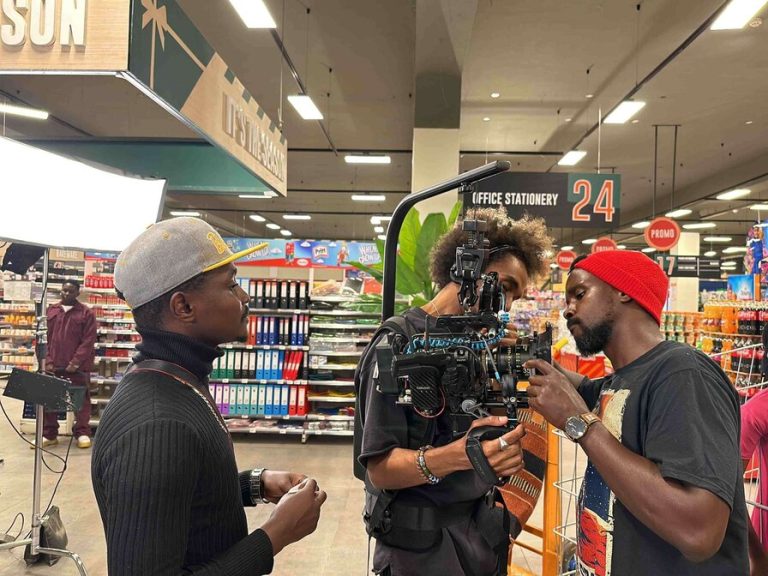
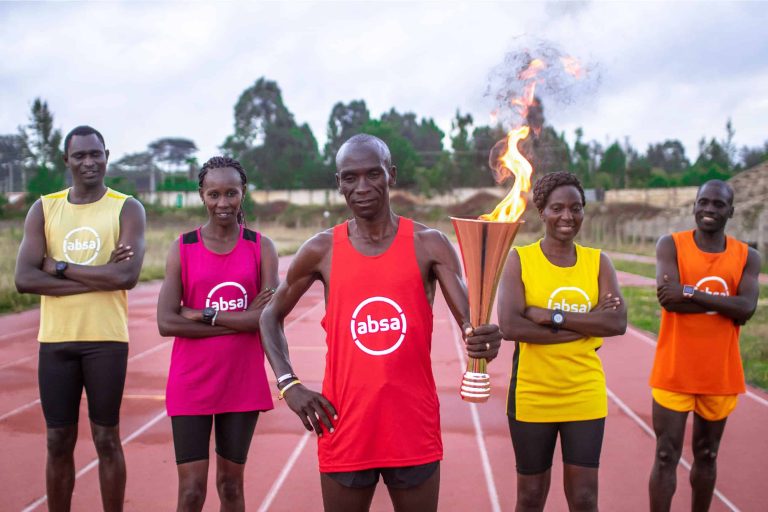
Red Giant Media’s production work includes commercials such as the ABSA production with Eliud Kipchoge and the Naivas Kikapu Kibonge production, and the same principle applies to audio: the brief and the script decide the result more than the studio does.
Can you use popular music in your ad, podcast or event?
Not without permission. Putting a song into an ad, podcast or video needs a licence from the rights owners, and playing music to the public at an event needs a public performance licence from Kenya’s collecting societies.
These are two different licences, and people mix them up:
- Using music inside your content (a jingle built on a hit song, background music in a podcast, a track in a commercial) needs permission from whoever owns the song and the recording, usually the publisher and label or the artist directly. A public performance licence does not cover this. Royalty-free or custom-composed music avoids the problem.
- Playing music in public at an event, venue or activation is licensed through the collective management organisations: MCSK for composers and authors, KAMP for producers of sound recordings, and PRISK/PAVRISK for performers, all regulated by the Kenya Copyright Board (KECOBO). KECOBO published consolidated music tariffs for 2026 to 2028.
Be aware that MCSK’s operating licence has been in dispute with KECOBO and before the courts through 2025 and 2026, with rulings going both ways. Before paying anyone, check KECOBO’s current list of licensed bodies and ask the collector for a valid licence. Sampling other people’s recordings in music production also needs clearance from the owners.
Simple rule: if you did not commission it and do not hold a written licence for it, do not put it in an ad.
How do you choose a recording or podcast studio in Nairobi?
Listen to finished work from the studio, visit at the time you would record, and confirm what the hourly rate includes. The room’s sound matters more than the equipment list.
- Ask for raw and finished samples. A finished episode can hide a noisy room. A raw file cannot.
- Visit at your recording time. Studios on busy roads in Westlands, Kilimani or the CBD can pick up traffic and generators at certain hours.
- Check power backup. A power cut halfway through a CEO interview is costly. Ask about UPS and generator.
- Confirm files and ownership. You should receive the raw multitrack files and the finished masters, and own both.
- Check parking and access. Senior guests will not wait 20 minutes for a parking slot.
- Ask about turnaround. Get the editing delivery time in writing, especially for a weekly show.
How to brief a studio (what to send)
Send a short brief before you ask for a quote. It makes quotes comparable and avoids paying for studio hours spent deciding things.
| Send this | Example |
|---|---|
| Output and length | 30-second radio ad, or 40-minute video podcast episode |
| Number of versions | English and Kiswahili, 15 and 30 seconds |
| Voices and guests | Two hosts, one guest, or a casting request |
| Music | Original, library, or a track you have licensed |
| Where it will run | Named radio stations, Spotify, YouTube, internal only |
| Brand references | Previous ads, tone of voice, words to avoid |
| Deadline and approvals | Air date, who signs off, how many revision rounds |
| Budget range | Lets the studio propose the right level of production |
If your audio sits inside a wider campaign, our guides to video production in Kenya, hiring photographers in Nairobi and product launch events cover the other pieces. For choosing an agency to run the whole campaign, see marketing and advertising agencies in Kenya.
Red Giant Media has been Nairobi-based, since 2014, and has worked with brands including Safaricom, MultiChoice Kenya, Family Bank and Co-operative Bank. Our production team handles audio, video and photography, including scripts, voices and music clearance.

Need a podcast, jingle or radio ad produced?
Tell us what you need, where it will run and your deadline. We will scope it honestly, including what you can do without.
Quick answers
How much does it cost to rent a podcast studio in Nairobi?
Typical 2026 rates are about KES 2,000 to 6,000 an hour for audio-only studios and KES 5,000 to 15,000 an hour for multi-camera video podcast studios. Editing is usually charged separately.
How much does a radio advert cost to make in Kenya?
Producing a standard 30-second radio ad typically costs KES 20,000 to 80,000, depending on voices, languages and music. Airtime is separate and ranges from about KES 5,000 to 55,000 per 30-second spot excluding VAT.
How much does a jingle cost in Kenya?
An original composed and sung jingle typically starts around KES 60,000 and can pass KES 250,000 with live instruments, well-known singers and several language versions. Get a written quote that lists versions and usage.
Can I use a popular song in my radio ad or podcast?
Only with a licence from the people who own the song and the recording. A public performance licence from the collecting societies does not cover use inside an ad or podcast. Custom or licensed library music is the safer route.
Do I need a music licence for a corporate event in Kenya?
Playing music in public is licensed through Kenya’s collective management organisations under the Kenya Copyright Board. MCSK’s licence status has been in court in 2025 and 2026, so check KECOBO’s list of licensed bodies and ask the venue or DJ who holds the licence.
How long does it take to produce a podcast episode?
Plan for two to three hours of studio time per hour of finished recording, plus two to five working days for editing, depending on clips and graphics. Weekly shows work best when several episodes are recorded in one session.