

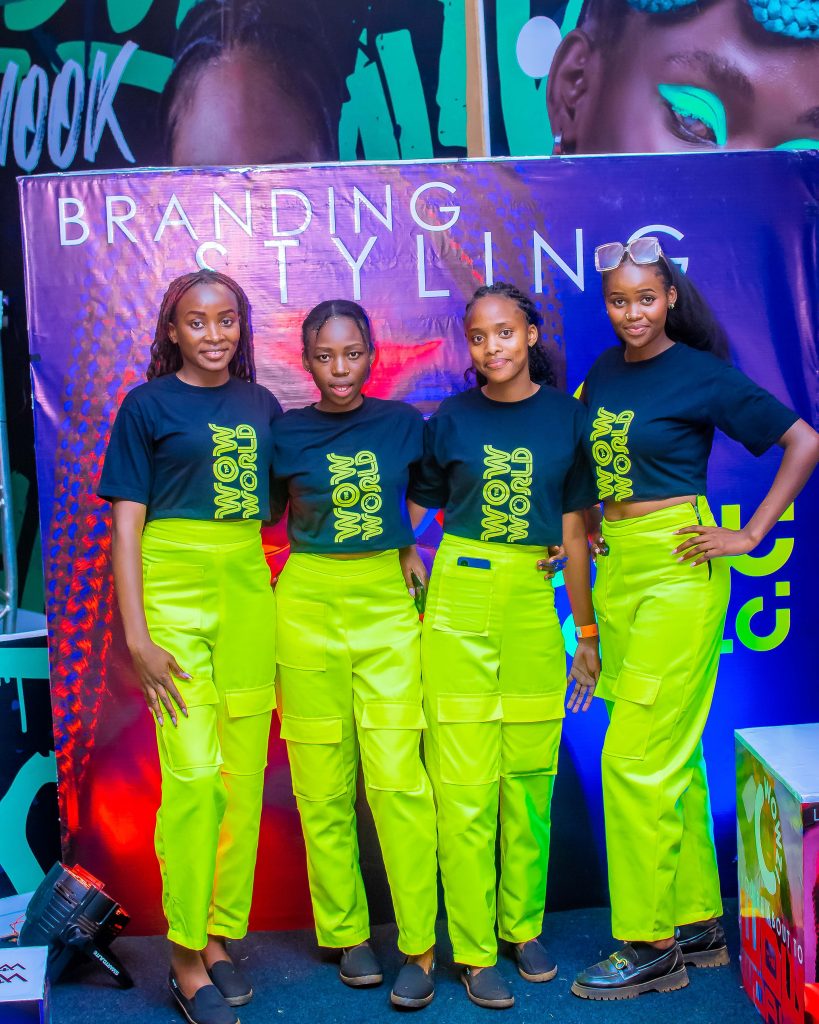
A brand ambassador is the person your customer actually meets. The TV advert, the billboard and the Instagram post all point somewhere, and very often that somewhere is a young man or woman in a branded T-shirt at a supermarket aisle, a mall concourse or the back of a roadshow truck. Get that person right and the activation works. Get it wrong and you have paid for a tent.
- Brand ambassadors sample, demonstrate, sell, register customers and collect feedback for a brand, usually on short contracts tied to a campaign.
- In 2026 clients typically pay an agency about KES 2,500 to 4,500 per ambassador per day in Nairobi, more for hostesses and supervisors. Always get a written quote.
- The rate should cover training, uniform, supervision, transport and daily reporting. Ask what is in it.
- One supervisor for every eight to ten ambassadors is a sensible ratio for field work.
What does a brand ambassador do?
A brand ambassador represents a product face to face, so that a customer can try it, ask about it and buy or sign up on the spot. In Kenya the job title covers several different roles, and it helps to be clear which one you are hiring for.
- Sampling and demonstration. Handing out tastings of a new juice, cooking with a new flour, showing how a phone feature works. This is the bread and butter of in-store and mall work.
- Sales and registration. Selling a product at a promotional price, registering people for a service, a loyalty programme or a mobile money product. Here the ambassador needs to handle money or customer data properly.
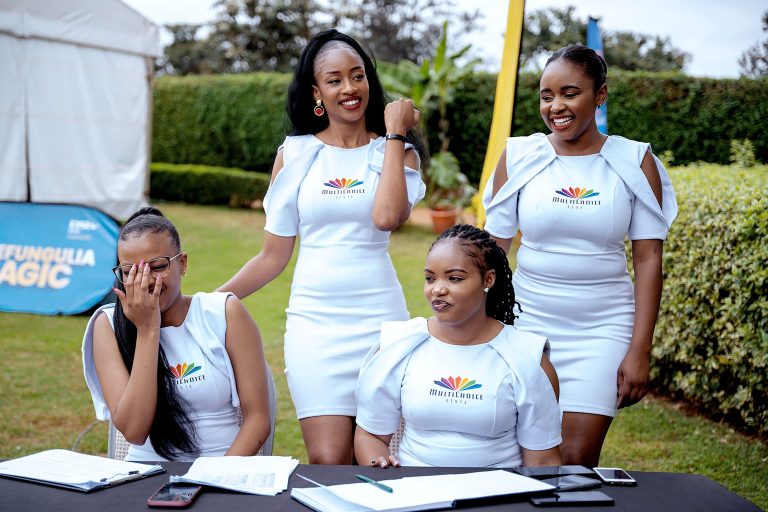
- Event hosting. Welcoming guests at a launch or corporate event, managing the registration desk, guiding people to seats, handing out gift bags. This is usually called hostess or usher work.
- Roadshow and market crew. Working off a branded truck in towns and open-air markets, running games on the stage, distributing merchandise and talking to crowds. Longer days, more travel, more stamina.
- Feedback and data. Recording how many people were reached, what they said, what sold and what did not. Done well, this is the part a marketing manager values most after the campaign.
The phrase is also used for celebrities and influencers who are paid to be the face of a brand. That is a different kind of contract, negotiated through talent managers, and it is not what this guide covers.
How much do brand ambassadors cost in Kenya?
Typical 2026 rates billed to a client run from about KES 2,500 to 4,500 per ambassador per day in Nairobi, with hostesses and supervisors higher. Treat these as general market ranges for planning, not fixed prices, and ask for a written quote for your own brief.
| Role | Typical rate billed per person per day (2026) | Notes |
|---|---|---|
| Brand ambassador / promoter (sampling, in-store, mall) | KES 2,500 to 4,500 | Usually an 8-hour day including breaks. Weekend and public holiday days may cost more. |
| Roadshow or market crew | KES 3,000 to 5,000 | Plus accommodation and meals when the tour leaves Nairobi. |
| Event hostess / usher | KES 3,000 to 6,000 | Higher for evening events, bilingual hosts or strict grooming briefs. |
| Team leader / supervisor | KES 4,000 to 7,000 | Manages a team, handles stock and sends daily reports. |
| Training day | Often half to full day rate | Usually one day before launch; longer for technical products. |
What moves the quote up or down
- Number of days and people. A 60-day programme with 20 ambassadors is priced per day very differently from a single Saturday with four.
- Location. Upcountry work adds transport, accommodation and per diems. Rural roadshows need more vehicle time than people time.
- Skill level. Selling a financial product or a smartphone needs better-educated, better-trained staff than handing out samples.
- Hours. Evening events, early market starts and long weekend shifts all cost more.
- Uniform and kit. Branded T-shirts and caps are cheap. Tailored outfits, branded aprons, tablets for data capture and gazebos are not.
- VAT. Agency invoices in Kenya normally carry 16% VAT on top. Check whether the figure you are comparing includes it.
From experience: the cheapest daily rate is rarely the cheapest campaign. If ambassadors are paid late or poorly, the good ones stop turning up by week two and you are training replacements on your own budget.
What should a client expect from the agency?
For the daily rate, a client should get people who have been recruited against the brief, trained on the product, dressed in brand uniform, supervised in the field and reported on every day. If any of those is missing, ask why.
Recruitment and briefing
You should see a shortlist with photos and a short profile, and you should be able to ask for replacements. Languages matter more than people expect: Kiswahili and English everywhere, and a local language for some upcountry markets.
Training
A proper training day covers the product, the key messages, the answers to awkward questions, the price, the mechanics of any promotion, and what not to say. For anything involving health claims, finance or alcohol, the brand’s own team should sign off the script.
Uniform and presentation
Agree the uniform early, because branded clothing takes time to produce. Ask for spare sets and a laundry plan for multi-day work.
Supervision and reporting
Expect a daily report by the end of each day: attendance with photos, number of people reached, samples given, sales or sign-ups, stock levels and customer comments. Time-stamped photos and simple digital forms make this checkable. Where personal data is collected, the agency should handle it in line with the Data Protection Act 2019, with consent captured at the point of collection.
At Red Giant Media we treat the daily report as part of the product, not paperwork. It is the only way a client can tell the difference between a busy stand and a well-run one.
How do you hire brand ambassadors?
Most brands hire through an activation agency that recruits, trains, pays and supervises the team. You can hire directly, but you then carry the recruitment, payroll, supervision and replacement work yourself.
- Write down the objective. Trial, sales, sign-ups or awareness. Each needs a different kind of person and a different report.
- Say where and when. Outlets, towns, dates and hours. Check retailer permissions early, as supermarkets and malls have their own approval process and fees.
- Share the product and the rules. Price, promotion mechanics, claims you can and cannot make.
- Ask for an itemised quote. People, days, training, uniform, transport, supervision, materials, management fee and VAT shown separately.
- Agree the reporting format before day one. Then hold the agency to it.
- Visit unannounced. Walk past the stand at 3pm on a Tuesday. You will learn more than any report tells you.
For the bigger picture on planning a campaign, see our guide on choosing a brand activation company and our ideas for in-store activations. If your ambassadors will be travelling with a truck, the roadshows page explains how we run those.
Want to work as a brand ambassador?
Red Giant Media recruits brand ambassadors, hostesses and supervisors for campaigns as they come up. Work is campaign-based, so there is no guarantee of a placement, and pay and terms are confirmed in writing for each job before you start.
What we look for
- Confidence talking to strangers in Kiswahili and English. A local language is a plus for upcountry work.
- Reliability. Turning up on time, every day of the contract, matters more than anything else.
- Honesty with stock, cash and customer data.
- Good presentation and a willingness to follow a brand’s grooming and uniform rules.
- A smartphone for daily check-ins and reports.
- Experience in sales, sampling or events helps, but we train people who show the right attitude.
How to apply
Send your name, location, phone number, a recent clear photo and a short note on any past activation or sales work by WhatsApp to 0702 826207 or by email to [email protected]. We keep details on file and contact people when a suitable campaign comes up.
Stay safe: no genuine agency should ask you to pay a fee to be registered, trained or placed. If anyone claiming to recruit for Red Giant asks you for money, do not pay and let us know on the number above.
Need a team of brand ambassadors?
Tell us the product, the outlets or towns, the dates and what you want to achieve. We will come back with a team plan and an itemised quote.
Quick answers
How much does it cost to hire a brand ambassador in Kenya?
Typical 2026 rates billed by agencies in Nairobi are about KES 2,500 to 4,500 per ambassador per day, with hostesses and supervisors higher. Travel, uniforms, training and VAT can be extra, so ask for an itemised written quote.
What is the difference between a brand ambassador and a hostess?
A brand ambassador usually samples, demonstrates or sells a product in shops, malls or markets. A hostess or usher looks after guests at an event, handling registration, seating and hospitality.
How many brand ambassadors do I need for an activation?
It depends on footfall and the task. A supermarket sampling stand often needs two people per outlet, and field teams usually need one supervisor for every eight to ten ambassadors.
What should a brand ambassador report every day?
Attendance with photos, people reached, samples given, sales or sign-ups, stock levels and customer comments, sent by the end of each day.
How do I apply for brand ambassador jobs in Kenya with Red Giant Media?
Send your name, location, phone number, a clear photo and any past experience by WhatsApp to 0702 826207 or email [email protected]. Work is campaign-based, so there is no guaranteed placement, and you should never pay anyone to be registered.