
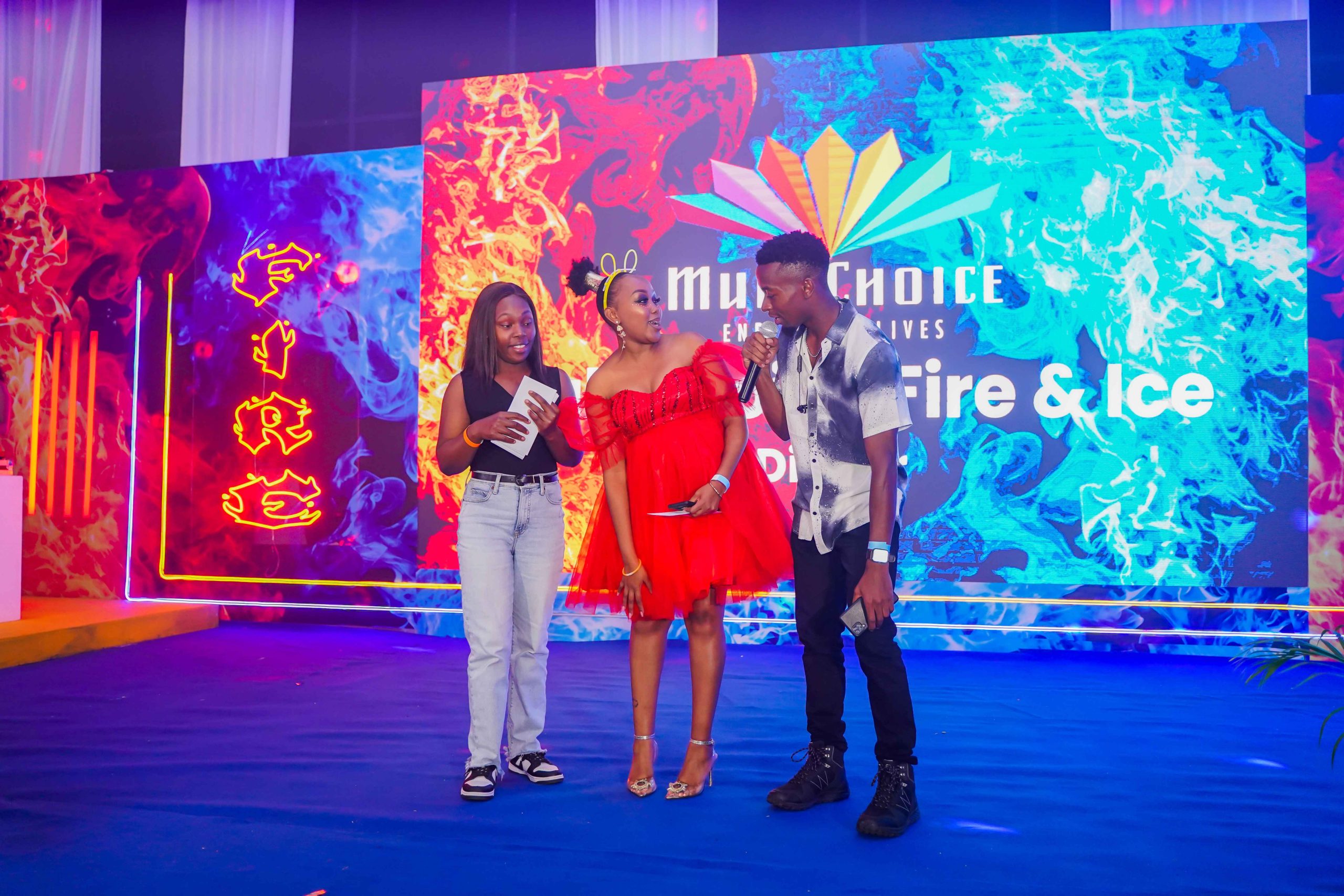
Every December someone turns up to the office party in a three-piece suit while everyone else is in jeans, or the other way round. Both of them read the same invitation. A dress code only works if it is specific, and this guide is for the people writing it as much as the people reading it.
- “Smart casual” means different things to different people. Add an example on the invitation.
- Kenyan formal wear, including well-made African print, belongs at any corporate event, black tie included.
- Dress for the venue and the weather: grass, evening chill in Nairobi, heat at the coast, and December rain.
- Organisers should keep themes affordable and optional, so nobody spends a week’s pay on one evening.
What each dress code means
These are the codes you will see most often on corporate invitations in Kenya, and what they usually mean in practice.
| Dress code | Typically means | Safe choice |
|---|---|---|
| Casual | Relaxed, but still a work event. | Clean jeans or chinos, a good shirt or blouse, smart trainers or flats. |
| Smart casual | One step up from office wear on a Friday. | Chinos or tailored trousers with a collared shirt, no tie. A dress, or trousers with a smart top. |
| Business or lounge suit | What you would wear to meet an important client. | A suit, tie optional. A tailored dress or trouser suit. |
| Cocktail | Dressier than business, evening feel. | A dark suit, or a knee- or midi-length dress. Statement accessories welcome. |
| Black tie | The most formal code you will meet at a corporate event. | A dinner suit with bow tie, or a long gown. Formal African attire is equally correct. |
| Themed | Costume or a set colour, era or culture. | Follow the theme with one or two clear pieces. You do not need a full costume. |
When in doubt, aim for one level smarter than you think. It is easy to remove a jacket. It is hard to look relaxed when you are the only person in a T-shirt.
Themed and African-inspired dress
African print and Kenyan formal wear
A well-cut kitenge shirt, a kaunda suit, a dashiki, or a gown in ankara or kente-style print is appropriate at almost any corporate event, including formal ones. For men, a tailored print shirt with dark trousers works for smart casual; a full print suit or formal tunic works for cocktail and black tie. For women, a tailored print dress or a gown with a structured headwrap does the same.
Swahili and coastal themes
Kanzu with a kofia, kikoi wraps, kanga-print dresses and light linen all suit a Swahili-themed evening. Treat these as respectful dress rather than costume. If you are planning one, see our guide to themed corporate events in Kenya.
Colour themes
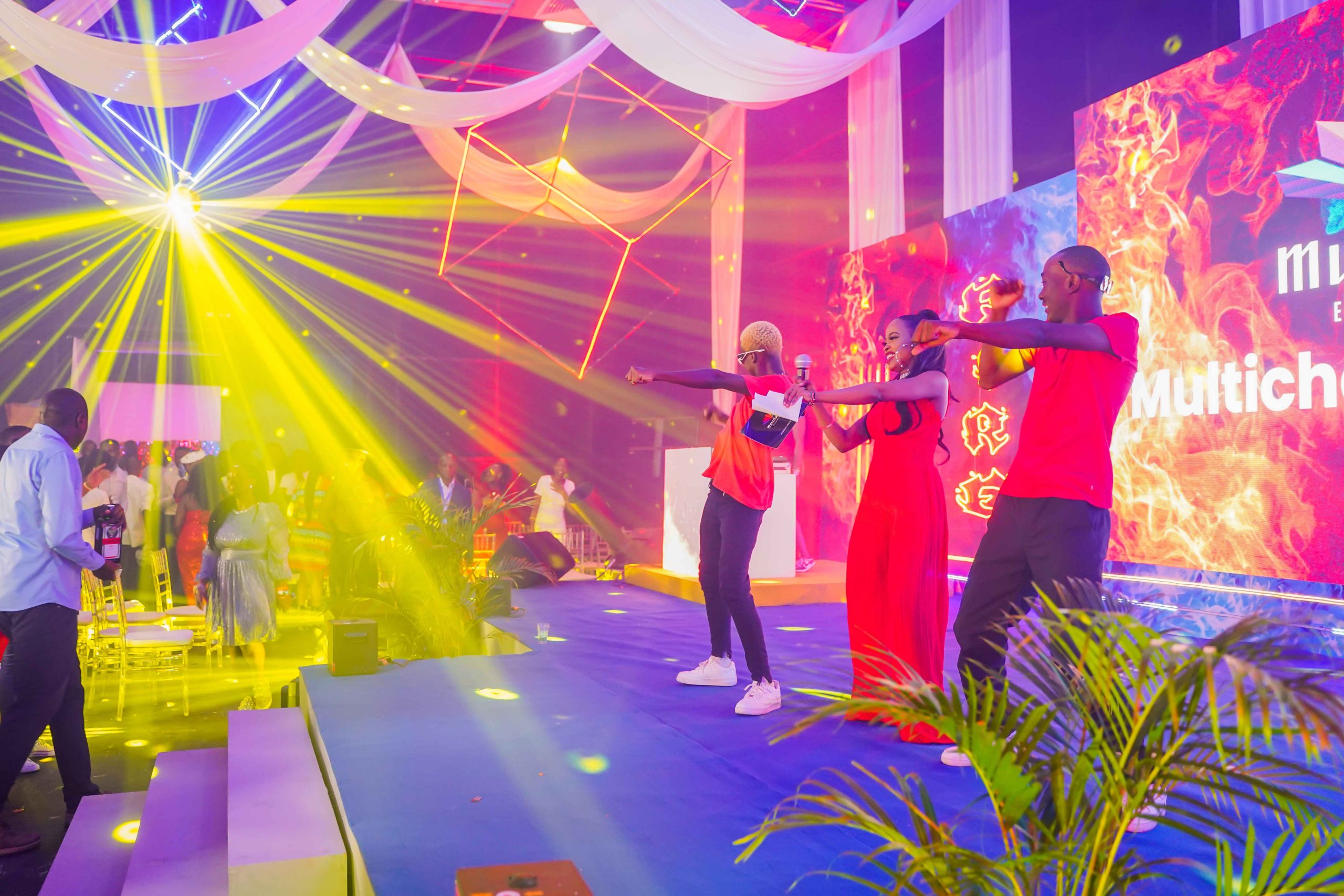
All white, black and gold, or company colours are popular because everyone can join in with what they already own. They also photograph well in group shots.
Era and costume themes
Retro, the 1920s, Hollywood or “your favourite musician” can be great fun, but they ask more of guests. Give at least three weeks’ notice and make it clear that partial effort is welcome.
From experience: themes with one simple signature item (a red accessory, a hat, a print shirt) get far more people joining in than themes that need a full outfit.
Dress for the venue and the weather
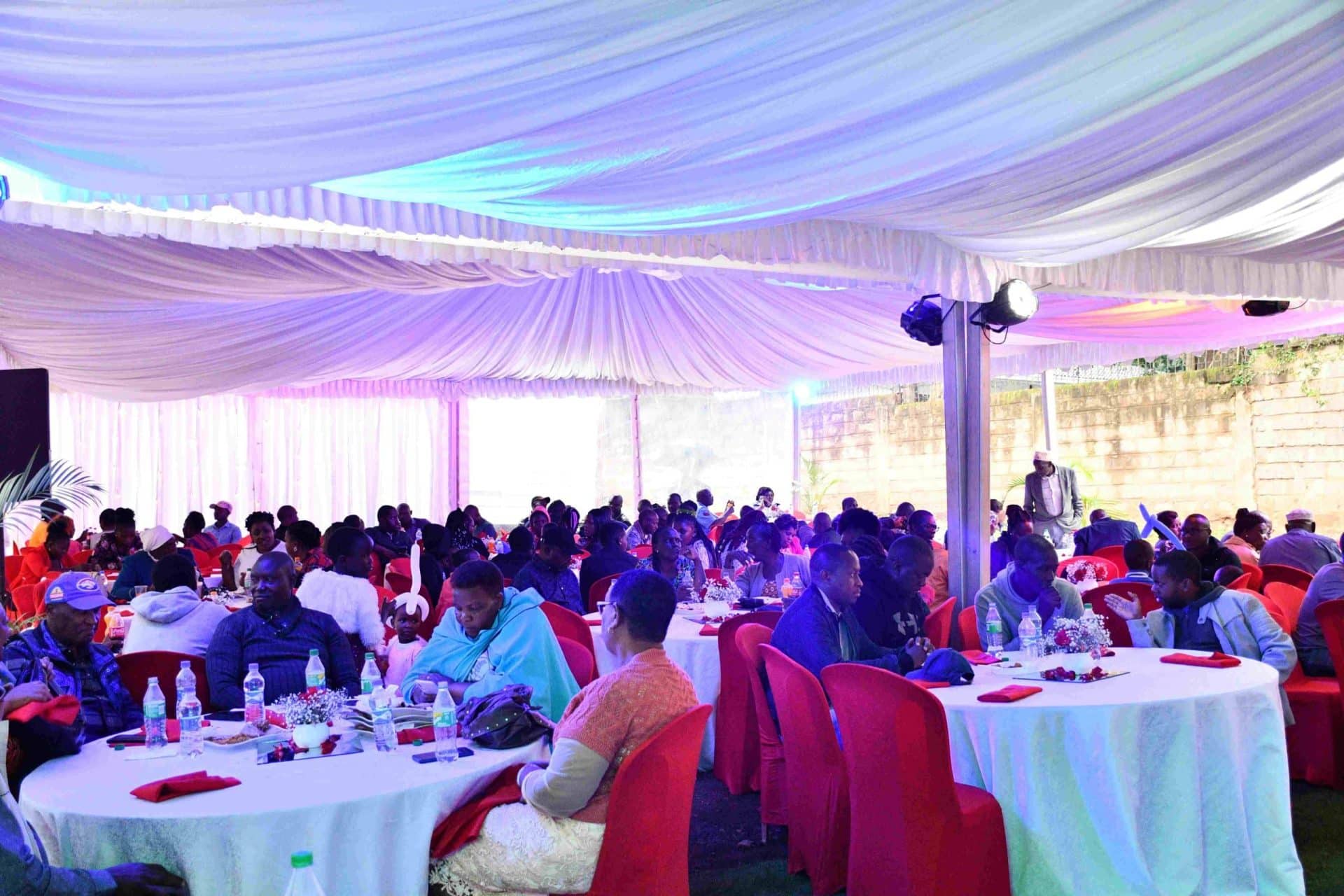
- Garden venues. Stilettos sink into lawns. Block heels, wedges or smart flats are kinder. Read our notes on garden venues in Nairobi.
- Nairobi evenings. Even in December it cools down after sunset, which is around 6:30 to 6:45pm. Bring a jacket, shawl or wrap.
- Rain. December falls in the short rains. If the party is outdoors, carry an umbrella and avoid fabrics that show water.
- The coast. In Mombasa, Diani or Watamu, go for linen, cotton and light colours. Heavy suits are unnecessary.
- Dancing. If there is a DJ or band, choose shoes you can stand in for four hours.
For organisers: setting the dress code
Be specific
Do not just write “smart casual”. Add one line: “Think what you would wear to a nice dinner. Jackets optional, no trainers.” Better still, add a picture or two to the invitation email.
Keep it affordable
Staff at different levels have very different budgets. A black-tie requirement can quietly push junior staff into hiring outfits they cannot afford. Colour themes and “African elegance” codes let people use what they have. If you want a costume theme, consider a small allowance or a shared prop table at the entrance.
Make it inclusive
State clearly that traditional, religious and cultural dress is welcome under any code. Allow comfortable alternatives for anyone with mobility needs or who is pregnant. And remember not everyone wants to wear a short dress or tight trousers; keep the description open.
Tie it to the event
The dress code should match the décor, the venue and the programme. A black-tie dinner in a hotel ballroom and a sports-day party on a lawn need different codes. Matching the dress code to the theme also makes the photos look like one event rather than five. If you are choosing gifts or awards for the night, our guide to end-of-year gifts for employees may help.

What to avoid at a work party
- Anything you would be uncomfortable seeing in a photo on the company’s social media page on Monday.
- Costumes that mock a culture, religion or group. If you are unsure, skip it.
- Brand-new shoes you have never walked in.
- Large logos from competitors of your employer or your client.
- Very casual wear when the invitation says business or cocktail, even if you plan to change later.
Planning your end-of-year party?
We plan the theme, the dress code, the décor and the programme so they work together. Send us your date, headcount and budget.
Quick answers
What does smart casual mean for a Kenyan office party?
Usually chinos or tailored trousers with a collared shirt and no tie, or a dress or smart top with trousers. Avoid trainers and T-shirts unless the invitation says casual.
Can I wear African print to a black-tie event?
Yes. Formal African attire, such as a tailored print suit, a formal tunic or a print gown, is fully appropriate at black-tie events in Kenya.
How much notice should guests get for a themed dress code?
At least three weeks for a costume or era theme, and two weeks for a colour theme. Put the dress code on the first invitation, not in a later reminder.
Is it acceptable to change outfits during the party?
Yes, many people bring a second, more comfortable outfit for dancing. Arrive in the stated dress code and change after the formal part of the programme.


