Sports events look simple from the stands: teams play, people cheer, someone lifts a trophy. Behind that are gates, tickets, medics, toilets, water, security, sound, sponsors and a plan for when it rains at 2pm. Whether it is a company sports day for 300 staff or a public tournament in a stadium, the planning follows the same logic.
- Book the venue early and get its rules in writing, including what the stadium provides and what you must bring.
- Approvals, security and medical cover scale with the crowd. Plan them before you sell a ticket.
- Design the day around the people watching as much as the people playing.
- Have a weather plan. Both rainy seasons and midday heat affect outdoor sport in Kenya.
Types of sports event and what they need
| Event type | Typical set-up | Main planning focus |
|---|---|---|
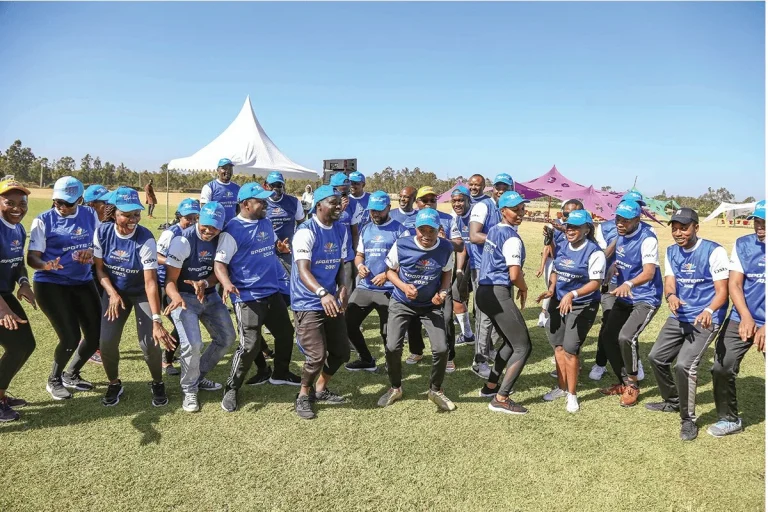
| Corporate sports day | Staff teams, mixed games, food, music, prize-giving | Inclusion for all fitness levels, shade, catering, transport |
| Inter-company or community tournament | Fixtures across a day or weekend, referees, a final | Scheduling, officials, pitch availability, results tracking |
| Public match or stadium event | Ticketed crowd, gates, broadcast or streaming | Approvals, security, ticketing, crowd flow, medical cover |
| Fun run or walk | Route, water points, start and finish village | Route approvals, marshals, timing, traffic management |
| Brand activation at a match | Fan zone, sampling, half-time moments | Rights holder approval, positioning, crowd interaction |
For staff events specifically, our guides to team building venues around Nairobi and team building exercises cover venues and activities in more detail.
Booking the venue and approvals
Choosing and booking
Kenya has national stadiums, county stadiums, school and university grounds, sports clubs and private sports complexes. Each is run by a different body with its own booking process, fees and conditions. Large stadiums are often booked well in advance for league fixtures, national events and concerts, so start early and have a second date in mind.
When you visit, ask:
- What exactly is included: pitch, changing rooms, floodlights, scoreboard, PA system, seating areas, parking?
- What is the pitch condition, and are there restrictions on vehicles, stages or tents on the grass?
- Where does power come from, and is a generator needed?
- How many working toilets are there, and will you need extra units?
- Which gates can be used, and who controls them?
- What security and cleaning does the venue provide, and what must you bring?
- What are the access times for set-up and breakdown?
Approvals
Requirements depend on the size of the crowd and the nature of the event. As a general guide, check with the venue management, the county government (for public events, noise and any road use), and the police (for large public gatherings and traffic). If you play music, confirm licensing with MCSK, KAMP and PRISK. For events selling food, check county public health requirements. Fun runs on public roads need traffic management agreed with the authorities.
From experience: ask the venue for its last event’s approvals checklist. Stadium managers know which offices need to sign off, and it saves you discovering a missing approval the week of the event.
Crowd safety, security and medical cover
This is where sports events differ most from indoor corporate events. Crowds move together, emotions run high and people stay for hours in the sun.
- Crowd flow. Plan entry, exit and emergency routes with the venue. Keep gates staffed and open well before kick-off so queues do not build.
- Security. Use licensed security with a clear briefing, a supervisor and radio contact with your control point. Agree the role of police officers if they are present.
- Medical cover. Arrange first aid and ambulance cover from a recognised provider, sized for the crowd and the type of sport. Mark the first-aid point clearly.
- Water and heat. Free drinking water points, shade for spectators and players, and breaks in the schedule during the hottest part of the day.
- Lost children and lost property. One known point for both, announced over the PA.
- Control point. A single place where the event manager, security lead, medical lead and venue representative can be found all day.
Designing the day
Schedule
Build the running order backwards from the main moment, such as the final or the prize-giving. Allow buffer time between fixtures, because matches overrun and injuries happen. For corporate sports days, mix competitive games with fun events so that people who do not play sport still take part.
Weather
The long rains run roughly March to May and the short rains roughly October to December. In those windows, have tents for spectators, a covered area for food and prize-giving, and a clear rule for when play is suspended. In dry months, heat is the bigger risk, so start early and avoid hard activity at midday.
Spectator experience
- A good MC and sound system that reaches the whole ground.
- Scores and fixtures shown clearly, on a screen or board.
- Food and drink points spread out so queues stay short, with M-Pesa payment where you sell.
- Activities between matches: half-time games, music, sponsor activations.
- Transport plans for staff events, with fixed pick-up times so nobody is left behind.
Sponsors, branding and budget drivers
Sponsors want visibility and a chance to interact with the crowd. Agree in writing what each sponsor gets: pitch-side branding, a fan zone, sampling, naming of a trophy, mentions by the MC. Check that the venue allows the branding you promise, and that no existing venue deals conflict with your sponsors.
We will not quote typical totals, as they vary widely. The main budget drivers are:
- Venue hire, and any extra charges for floodlights or exclusive use.
- Security, medical cover and stewards, which scale with the crowd.
- Tents, seating, toilets, power and sound.
- Catering and water.
- Officials, equipment, kits, trophies and medals.
- Transport for teams and staff.
- Photography, video and any streaming.
For the full planning sequence, see our event planning checklist for Kenya.


Planning a sports day or tournament?
Tell us the date, the numbers and the kind of day you want. We will handle the venue, programme, safety and logistics, so you can enjoy it.
Quick answers
How far ahead should I book a stadium in Kenya?
As early as possible. Large stadiums are often booked for league fixtures, national events and concerts. For a big public event, start several months ahead and keep a second date in mind.
Do I need police approval for a sports event?
For large public gatherings, you should inform the police and agree security arrangements. Smaller private events at a sports club may only need the venue’s approval. Check with the venue and the county.
What medical cover does a sports event need?
At minimum, trained first-aiders and a marked first-aid point. Larger events and contact sports need ambulance cover from a recognised provider, sized to the crowd and the activities.
How do I include staff who do not play sport in a sports day?
Mix competitive fixtures with fun events such as relays, tug-of-war and games that need teamwork more than fitness, and give non-players roles as captains, judges or supporters.