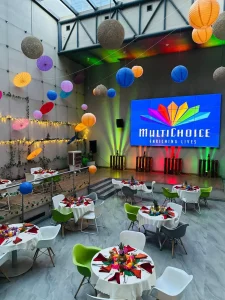
Every exhibition has two sets of rules: the ones in the exhibitor manual and the unwritten ones about what makes visitors stop. Most booth problems come from ignoring the first set. Most wasted booth budgets come from ignoring the second. This guide covers both for trade shows and expos in Kenya, along with what an exhibition booth typically costs and how to turn conversations into leads.
- Read the exhibitor manual first. Height limits, materials, electrics and build times shape the design.
- At Kenyan shows, space with a basic shell scheme has typically cost around KES 50,000 for 2m by 2m and KES 100,000 to 120,000 for a standard 3m by 3m booth per show; build, graphics and staff come on top.
- Design for the aisle: an open front, one clear message at eye level and above, and room to step in.
- Set a lead target, qualify every conversation with two questions, and follow up within a week.
Who sets the rules for an exhibition booth?
The venue and the show organiser set the rules, and they are usually combined in an exhibitor manual covering booth size, height limits, materials, power, build times and approvals. Ask for it the day you book and send it to whoever is building your booth.
Exhibitions in Kenya run at venues ranging from conference centres such as KICC in Nairobi to hotel ballrooms and open showgrounds. For the biggest annual show in the capital, see our Nairobi International Trade Fair exhibitor guide.
What exhibitor manuals usually cover
- Booth dimensions and height limits. Including rules on signage height and any two-storey structures.
- Materials. Often fire-retardant fabrics and boards, and restrictions on open flames, gas and certain paints.
- Electrics. Power is usually ordered from the organiser and connected by an approved electrician. Do not plan to plug in your own extension reels.
- Build-up and breakdown times. Often tight, sometimes overnight. Late builds may be fined or refused.
- Rigging and hanging. Hanging banners from the ceiling usually needs approval and the venue’s own riggers.
- Drawings and approvals. Custom builds often need plans submitted by a deadline.
- Insurance, waste and deliveries. Who is liable, where waste goes, and when vehicles can unload.
- Sound and activities. Limits on volume, performances, food sampling and giveaways.
If you play music, check whether the organiser holds the licence or whether you need one from MCSK, KAMP and PRISK. If you collect visitor details, the Data Protection Act 2019 applies.
From experience: most on-site stress comes from deadlines in the manual that nobody read: power orders, drawing approvals and badge requests. Put every deadline in a shared calendar the day you receive the manual.
Shell scheme or custom booth?
Choose a shell scheme for a first or occasional show, a modular system if you exhibit several times a year, and a custom build for flagship shows and launches. The table shows the trade-offs.
| Option | What you get | Best for | Watch out for |
|---|---|---|---|
| Shell scheme | Walls, fascia name board, basic lighting and power from the organiser | First-time exhibitors, small budgets, short notice | Looks like every other stand unless you add good graphics |
| Modular system | Reusable frames and fabric graphics that reconfigure for different sizes | Brands that exhibit several times a year | Higher first cost; storage between shows |
| Custom build (space only) | A booth designed and built for your space and brand | Flagship shows, launches, large spaces | Cost, approvals, build time and waste after the show |
If you exhibit more than two or three times a year, a modular system usually works out better than building custom each time. Ask your builder to design it so the same kit can cover a small and a large space.
How much does an exhibition booth cost in Kenya?
The space fee at Kenyan expos has typically been around KES 50,000 for a 2m by 2m shell scheme booth and KES 100,000 to 120,000 for a standard 3m by 3m booth per show. Your total is usually higher, because graphics, build, staff and giveaways sit on top of the space.
| Cost line | Typical range we see | Notes |
|---|---|---|
| Shell scheme booth, 2m by 2m | Around KES 50,000 per show | Usually includes fascia name, a table, two chairs, spotlights and one socket |
| Shell scheme booth, 3m by 3m or standard | KES 100,000 to 120,000 per show | Some shows charge foreign exhibitors in US dollars |
| Space only for a custom build | Priced per square metre by each organiser | Ask for the rate card; corner and aisle-front spaces often cost more |
| Graphics on a shell scheme | Quoted by size and material | Fabric prints can be reused; stickers on shell walls may carry a cleaning charge |
| Modular or custom build | Quoted per design | On a 3m by 3m space, a proper build and graphics often cost more than the space itself |
| Running costs | Varies | Staff and brand ambassadors, extra power, furniture, giveaways, transport and accommodation |
The space figures come from published exhibitor packs at Kenyan shows in recent years; 2026 rate cards may be higher, so check the current one for your show. These are typical ranges, not Red Giant’s prices. What moves the total most is the size and position of the space, whether you build custom, how many days the show runs, and how many staff you put on the floor. Get a written, itemised quote for the build and compare total cost per qualified lead, not just the booth price.
What booth design draws people in?
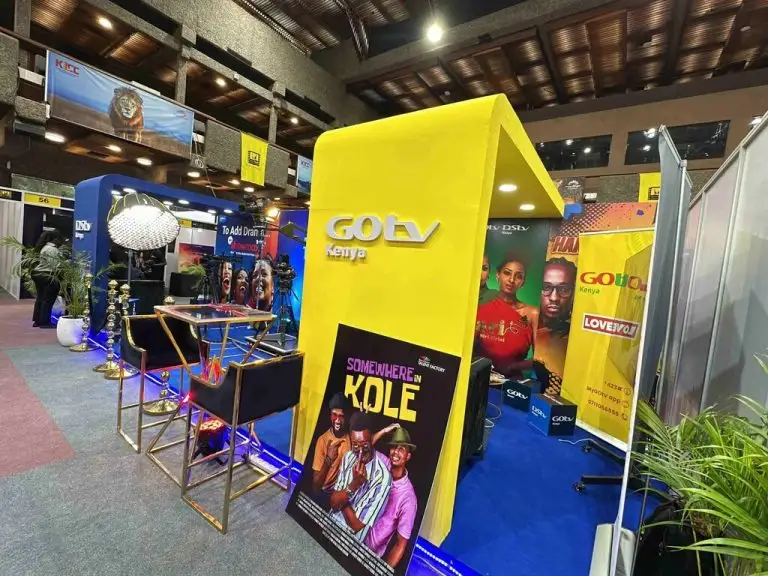
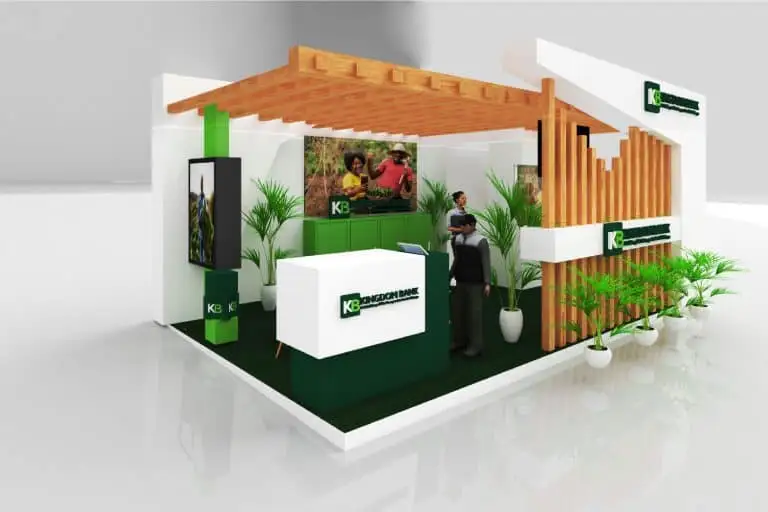
An open front, your brand and one clear line above head height, and something to do inside. Visitors walk an aisle and scan quickly; your booth has a few seconds to say who you are and why they should step in.
- Brand and message high up. Logo and one clear line above head height so it can be seen across the hall.
- An open front. Put counters to the side or back. A counter across the front is a barrier.
- Zones. A welcome point at the aisle, a demo or product area, and a quieter corner for serious conversations.
- Lighting. Hall lighting is often flat. Spotlights on products and backlit graphics make a big difference.
- Something to do. A product demo, a screen with a short loop, a quiz or a sample. Keep it quick.
- Storage. A lockable cupboard for bags, stock and brochures, so the booth stays tidy.
Screens work well, but keep video short, silent-friendly and readable from the aisle. Remember that hall noise drowns most audio.
Comfort, wellness and sustainability
Small comforts keep visitors on your booth longer and keep staff sharp, and reusable materials cut both waste and next year’s bill.
Comfort for visitors and staff
- A few seats where visitors can sit for a proper conversation.
- Drinking water, and phone charging points, which visitors appreciate more than another brochure.
- Anti-fatigue flooring or carpet for staff who stand all day.
- Shade and ventilation at outdoor shows, where heat and dust build up by afternoon.
- Staff rotas with real breaks and lunch away from the booth.
Health and wellness brands can go further with quick checks, stretching sessions or healthy snacks, but confirm with the organiser what activities and food are allowed.
Lower-waste booths
- Reusable frames and fabric graphics instead of printed boards that go in a skip.
- Undated graphics so the same panels work next year.
- LED lighting, which uses less power and runs cooler.
- Digital brochures through a QR code, with a small number of printed copies for those who want one.
- Giveaways people keep, such as useful branded items, rather than throwaway flyers.
- A plan for what happens to every part of the booth after breakdown.
How do you run the booth on the day?
Brief the team properly, agree a rota and a dress code, and work to a timeline that starts eight to twelve weeks out. A well-designed booth with an unprepared team wastes the money.
Brief staff on products, prices, the target visitor and the one or two questions that qualify a lead. If you are bringing in extra hands, our guide to hiring brand ambassadors in Kenya covers briefing and supervision.
A simple timeline
- Eight to twelve weeks out: book space, receive the manual, choose the booth type.
- Six weeks out: design approved, drawings submitted, power and furniture ordered.
- Three weeks out: graphics to print, staff briefed, giveaways ordered, lead form tested.
- Show week: build, inspect, rehearse, open.
How do you capture leads at an exhibition booth?
Use a short digital form or badge scan, ask two qualifying questions, record consent in line with the Data Protection Act 2019, and follow up within a week. Set a target for qualified leads before the show, not a target for brochures handed out.
| Method | Good for | Watch out for |
|---|---|---|
| Tablet or phone form | Most booths; data is clean and ready for your CRM | Keep it to five fields; have a charger and offline mode |
| Badge scanner from the organiser | Large trade shows with printed visitor badges | Scans give contacts but no context; add a note field |
| QR code to a WhatsApp chat or form | Busy booths and consumer shows | Visitors may scan and never finish; have staff help |
| Paper cards | Backup when power or network fails | Handwriting, lost cards and typing time afterwards |
Make every lead useful
- Two qualifying questions. For example: what are you looking for, and when are you planning to buy? Grade each lead hot, warm or cold.
- A note field. Write what the visitor actually wanted while you remember it.
- Clear consent. Say what you will send and how often, and give a way to opt out. That is good practice under the Data Protection Act 2019.
- A reason to share details. A demo slot, a quote, a sample or a useful download works better than a fishbowl of business cards. Lottery-style prize draws can fall under gaming rules in Kenya, so check before you run one.
- Daily hand-over. Export leads each evening and pass hot ones to sales the next morning.
- Follow-up within a week. A personal message that mentions the conversation beats a generic newsletter.
After the show, count qualified leads, meetings booked and sales that follow, and divide total booth cost by each. That number tells you whether to come back next year. For where expos fit in a wider plan, see experiential marketing services explained; for conferences with a stage programme alongside, our guide to summit stage and seating design; and for venues, Nairobi conference centres. Red Giant Media designs and builds booths and runs the team on the floor; see our production work.

Exhibiting soon?
Send us the show, your space size and the exhibitor manual. We will design and build a booth that meets the rules, works on the floor and captures leads properly.
Quick answers
How much does an exhibition booth cost in Kenya?
At Kenyan expos, a shell scheme booth has typically cost around KES 50,000 for 2m by 2m and KES 100,000 to 120,000 for a standard 3m by 3m booth per show. Graphics, custom build, staff and giveaways are extra, so check the show’s current rate card and get an itemised build quote.
Who sets the rules for an exhibition booth?
The venue and the show organiser. Their requirements are usually combined in an exhibitor manual covering booth size, height limits, materials, electrics, build times and approvals.
How early should I start designing an expo booth?
Eight to twelve weeks before the show for a custom build, so there is time for drawings, approvals and production. A shell scheme with new graphics can be done in less.
What is the best way to capture leads at an exhibition booth?
Use a short tablet form or badge scan, ask two qualifying questions, note what the visitor wanted, record consent under the Data Protection Act 2019, and follow up personally within a week.
Is a custom booth worth it?
For a flagship show or a launch, often yes. If you exhibit several times a year, a reusable modular system usually gives better value than building custom each time.