Red Giant · Guide
Roadshows in Kenya: Truck Hire, Routes, Costs and Ideas
Plan a roadshow in Kenya: roadshow truck hire rates in KES, truck types, branding and permits, routes around market days, activity ideas and measuring.
Get a costed plan WhatsApp usor call +254 702 826 207
- 4.7 Google rating
- 14+ years running events in Kenya
- Every line costed — nothing hidden
Starlink · Mastercard · MultiChoice · Safaricom · Kenchic
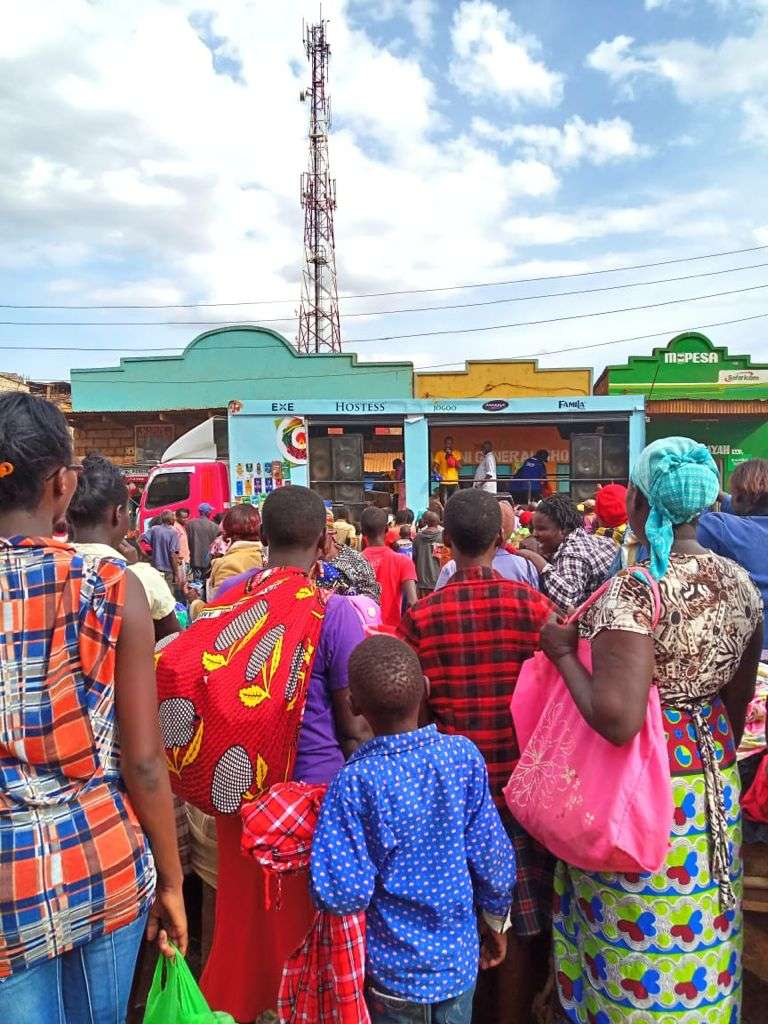
A roadshow is still one of the most direct ways to reach people in Kenya’s smaller towns and rural markets. A branded truck pulls into a market on the right day, the music starts, an MC gets the crowd going, and for a few hours your brand is the most interesting thing in town. Getting that right across ten or forty stops takes more planning than most briefs allow for, starting with the truck.
- Plan the route around market days and local events, not around the map alone.
- Choose the truck for the activity: a stage truck for entertainment, a walk-in unit for demos and sign-ups.
- Roadshow truck hire in Kenya typically starts around KES 30,000 a day for a mid-size stage truck with sound, and runs to KES 300,000 a day for a large hydraulic stage.
- Make sure the product is in local shops before the truck arrives, or the crowd has nothing to buy.
When is a roadshow the right tool?
A roadshow suits brands that sell widely through small shops, agents and markets and need to explain, demonstrate or sample across many towns. It is a poor fit for products that are not stocked outside the big cities.
Think food and household goods, telecoms and mobile money, pay-TV, seeds and farm inputs, financial services and health products. A great show in a town with no stockist creates goodwill and little else.
From concept to execution
- Objective. Trial, sales, sign-ups or awareness. Pick one main measure.
- Regions and route. Where your distribution is strong or where you want it to grow.
- Mechanic. What happens at each stop, minute by minute.
- Truck and crew. Built and branded to suit the mechanic.
- Approvals. County permissions and local authority notice for each stop.
- Trade link. Stock in local shops, distributor teams informed.
- Run, report, adjust. Daily numbers, weekly review, route changes if needed.
Allow at least six to eight weeks from brief to the first stop for a multi-county tour with a custom-branded truck.
Which roadshow truck should you choose?
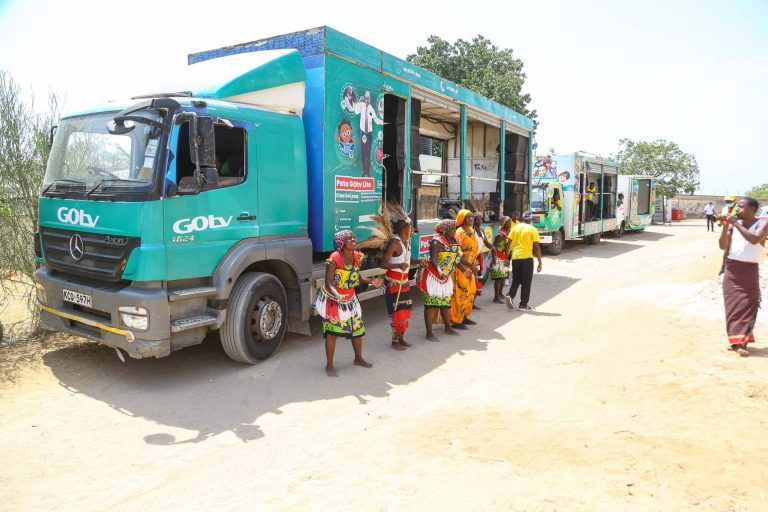
Choose a stage truck for music, MC-led games and crowds; a walk-in unit for demos and sign-ups; branded pickups for narrow roads and door-to-door sampling; and a convoy for large national tours.
| Option | Good for | Limits |
|---|---|---|
| Stage truck with fold-out platform | Music, dance, MC-led games and crowd moments in open markets | Needs open ground; less suitable for private conversations |
| Walk-in or container-style unit | Demos, product displays, sign-ups, financial services | Smaller crowds at a time; queues need managing |
| Branded pickups or vans | Narrow roads, villages, door-to-door sampling, supporting a main truck | Small stage, limited sound |
| Convoy (main truck plus support vehicles) | Large national tours with sampling teams fanning out from the main site | Higher fuel, crew and coordination costs |
Whatever you choose, check the basics: a reliable generator with fuel planned, a sound system sized for open air, a screen that can be seen in daylight if you plan to show video, secure storage for samples and stock, and shade for the crew. Ask whether the truck is owned by the agency or hired in, and what happens if it breaks down three counties away.
How much does roadshow truck hire cost in Kenya?
In 2026, roadshow trucks for hire in Kenya are typically listed from about KES 30,000 a day for a 22 to 25 foot stage truck with sound, to about KES 70,000 for a 40 foot truck, and KES 80,000 to 300,000 a day for hydraulic mobile stages. Fuel, crew, branding and permits are often extra.
| Truck type | Typical daily hire we see in 2026 | Usually suits |
|---|---|---|
| 22 to 25 foot stage truck with PA, generator, driver and DJ | KES 30,000 to 50,000 | Market stops, county tours, sampling with a crowd |
| 40 foot stage truck | From about KES 70,000 | Large markets, headline stops, bigger performances |
| Hydraulic mobile stage, about 20 foot | Around KES 80,000 | Fast setup, concerts and launches in towns |
| Hydraulic mobile stage, about 40 foot | Up to about KES 300,000 | Major events, national launches, big crowds |
| Branded pickup or van | Quoted separately | Support vehicle, villages, door-to-door work |
These are typical listed rates in the market, not Red Giant’s prices. Before you compare quotes, ask what the day rate actually includes.
What the day rate may leave out
- Fuel and mileage beyond a set distance, and the empty drive to the first stop.
- Crew costs: MC, brand ambassadors, supervisors, allowances and accommodation.
- Branding: design, printing, fitting and removal.
- Extra kit: LED screen, extra speakers, tents and furniture for a sampling area.
- Permits and local fees at each stop.
- Standby days when rain or a clash cancels a stop.
For tours of several weeks, daily rates are often negotiable. Agree the rate for travel days and rest days in writing, because those add up over a long route.
Branding the truck
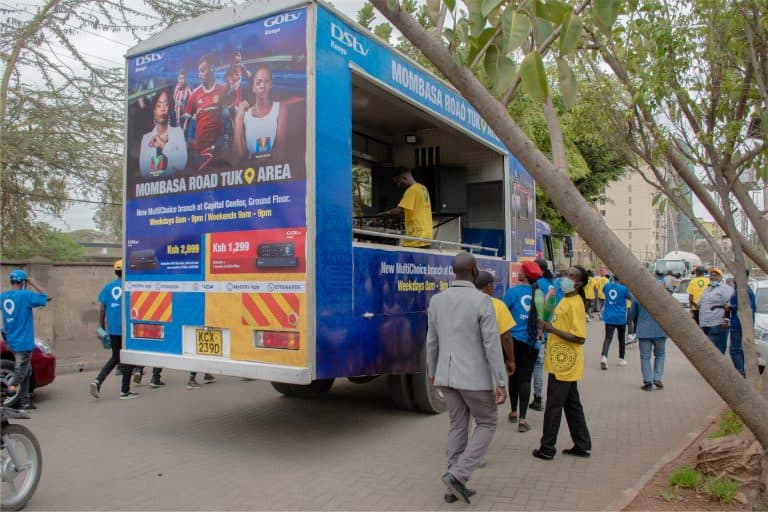
Most roadshow trucks are branded with printed panels or banners fitted to the sides and stage backdrop, or with a full vinyl wrap for longer campaigns. Panels are cheaper to change between clients; wraps look better and last longer. Allow one to two weeks for artwork approval, printing and fitting, and agree who removes the branding at the end. Some counties charge for advertising on vehicles, so ask about this when you apply for stop permits.
Permits
Using public spaces and amplified sound generally needs county approval, and local administration should be told before you arrive. Requirements differ by county. Our guide to roadshow regulations in Kenya covers who to check with.
How do you plan the route?
Build the route around market days, the busy hours of each town and the season, with one main stop a day for a stage show. A good route is built on local knowledge, not just distance.
- Market days. Most towns have one or two main market days a week. Arriving on the right day can multiply your crowd.
- Timing within the day. Mornings are for traders setting up. Late morning to late afternoon is usually the busy window. Leave before dusk if roads are poor.
- Season. The long rains (roughly March to May) and short rains (roughly October to December) can make murram roads difficult and keep crowds away. Harvest periods can mean people have more cash to spend.
- Stops per day. One main stop a day is realistic for a big stage show. Two is possible if towns are close and set-up is quick.
- Local events. Avoid clashing with funerals, political rallies or exams in school grounds. Ask local contacts before you lock dates.
From experience: send an advance person a day ahead of the truck. They confirm the site, meet the local administration and the market committee, and warn stockists. It costs little and saves whole days.
Activity ideas for rural and county reach
The best roadshow stops do four things in order: draw a crowd, get people to try the product, turn interest into a purchase or sign-up, and keep the conversation going after the truck leaves.
Draw the crowd
- A popular local MC who speaks the language of the area and knows the jokes that land.
- Dance competitions with small prizes, run in rounds through the afternoon.
- Live performances by local artists or a well-known name for headline stops.
- Football challenges, tug-of-war or sack races near the stage.
Get people to try
- Cooking demos for flour, oil or spices, with tastings handed out afterwards.
- Before-and-after demos for cleaning or personal care products.
- Live product set-up, such as decoders, solar lights or phones, with help on the spot.
- Seed or input demonstration plots at agricultural shows and farmer days.
Turn interest into action
- Buy-at-the-truck offers, with M-Pesa payment and stock on hand.
- On-the-spot sign-ups for mobile money, insurance or savings products, with trained staff and proper consent.
- Vouchers redeemable at a named local shop that day.
- Quiz questions about the product with small prizes for right answers.
Keep the conversation going
- Local radio announcements before arrival and a live link on the day.
- A WhatsApp number or SMS code for follow-up questions.
- Photo opportunities with the truck and branded props.
- Community gestures that fit the brand, such as a school visit or a market clean-up, agreed with local leaders.
The people on the ground make or break these moments; our guide to hiring brand ambassadors in Kenya covers recruiting and briefing them.
Budget drivers and measuring results
A roadshow budget is driven by days on the road, distance, crew size, the truck and permits; truck hire is only one line. We will not give typical tour totals because tours differ too much.
- Days on the road and number of stops.
- Total distance, fuel and road conditions.
- Truck build or hire, and branding.
- Crew: MC, DJ, performers, brand ambassadors, supervisors, drivers, plus accommodation and allowances.
- Samples, giveaways and prizes.
- County permissions and local fees, which vary by county.
- Content capture: photos and video for social media and reporting.
To get value, keep the truck working. Rest days in the wrong place and long empty drives are where money disappears. Cluster stops by region and build the route so the truck rarely drives more than a few hours between sites.
For measurement, track for each stop: estimated crowd (counted the same way every time), people engaged, samples given, sales or sign-ups, and stockist sales in the following week if your distributor can share them. Daily photos and supervisor notes complete the picture. Red Giant Media reports roadshows this way, stop by stop. For how roadshows fit with other formats, see below-the-line marketing in Kenya and experiential marketing services explained, and for comparing providers, our guide to brand activation companies.
Planning a roadshow?
Tell us the regions, the dates and what you want people to do. We will propose a route, a truck set-up and a stop plan, with costs broken down.
Quick answers
How much does it cost to hire a roadshow truck in Kenya?
In 2026, a 22 to 25 foot stage truck with sound, generator, driver and DJ is typically listed at about KES 30,000 to 50,000 a day, a 40 foot truck from about KES 70,000, and hydraulic mobile stages from about KES 80,000 up to KES 300,000 a day. Fuel, crew, branding and permits are often extra.
How many towns can a roadshow cover in a week?
With one main stop a day, five or six towns a week is realistic. Two stops a day is possible when towns are close and set-up is quick, but crowds and crew energy tend to drop.
Can I hire a roadshow truck without a full agency?
Yes, some suppliers hire trucks with a driver and sound only. You then handle the route, crew, approvals, samples and reporting yourself, which is a lot to manage for a multi-county tour.
What is the best time of year for a roadshow?
Dry months make roads and crowds easier. The long rains (roughly March to May) and short rains (roughly October to December) can disrupt rural routes, so build in spare days if you tour then.
Do I need permits for a roadshow in Kenya?
Usually yes. Using public spaces and amplified sound generally needs county approval, and local administration should be informed. Requirements differ by county, so confirm for each stop.