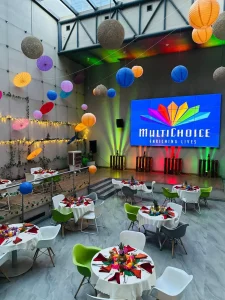
A mall gives you something few other places in Kenya do: thousands of people with time, money and a reason to be there, in a clean, safe, covered space. It also gives you a landlord with rules, a fixed footprint and shoppers who are very good at walking past stands. This is how to plan a mall activation that people stop for.
- Choose the mall for its shoppers, then the exact spot for its footfall. The spot matters more than the stand.
- Give people one clear thing to do in under a minute: taste, try, scan, play or buy.
- Book the space early and get the mall’s rules in writing. Load-in times and sound limits catch most brands out.
- Decide how you will measure it before day one, and keep the measure simple.
When a mall activation is the right call
Mall activations work best when the product can be experienced on the spot. Food and drink that can be sampled. A phone, a TV package or a gadget that can be handled. A bank or insurance product where a short conversation and an on-the-spot sign-up make sense. A cosmetic that can be tried.
They work less well for products that need a long explanation, a private conversation or a purchase decision that takes weeks. You can still use a mall for those, but the goal changes from selling to collecting interested contacts.
A mall is also a good place for a launch because it gives you a ready audience without having to build one. A product launch at a hotel needs invitations and RSVPs. A launch in a mall atrium on a Saturday afternoon already has a crowd. The trade-off is control: you cannot pick who walks past.
Choosing the mall and the spot
Match the mall to the shopper
Nairobi’s malls draw quite different crowds. A large mall on a main highway pulls families from across the city at weekends. A smaller neighbourhood mall has the same regulars several times a week. A mall anchored by a big supermarket is busy with grocery shoppers who have a list and limited patience. Outside Nairobi, the main mall in a county town often sees a much wider mix of people than you would expect.
Ask the mall’s marketing team who their shoppers are and when they come. Then go and look for yourself. Spend an hour on a Saturday and an hour on a weekday evening at the spot you are considering. Count roughly how many people pass and how many look like your customer.
The spot inside the mall
| Location | Good for | Watch out for |
|---|---|---|
| Main atrium or centre court | Launches, stage moments, big builds, performances | Higher cost, competing events, strict sound limits |
| Near the supermarket entrance | Sampling, food and household products, quick trials | Shoppers in a hurry; trolleys and narrow walkways |
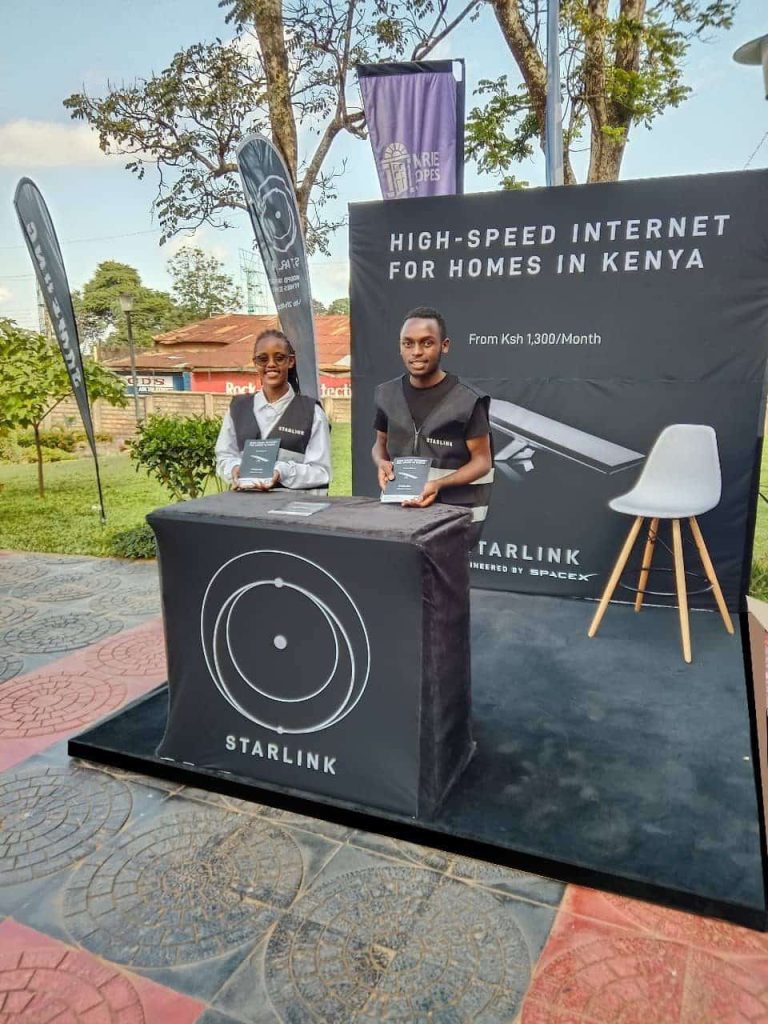
| Corridor or kiosk space | Sign-ups, demos, longer conversations | Lower footfall; you need staff who can draw people in |
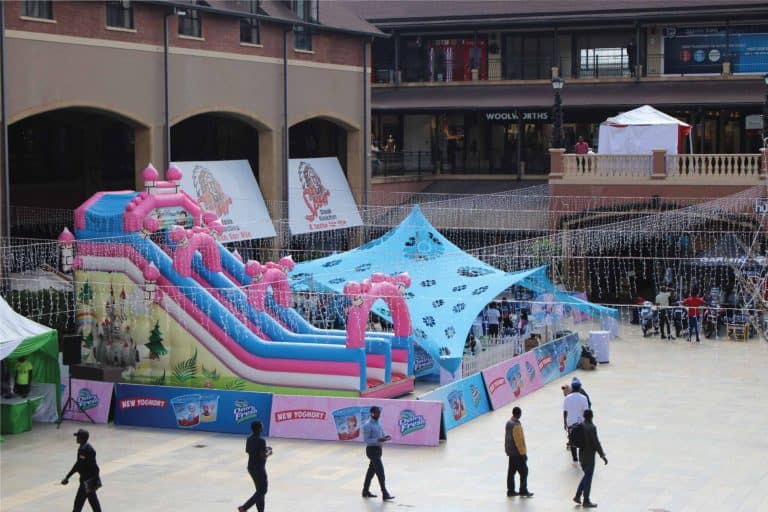
| Parking or outdoor forecourt | Vehicles, large structures, louder activities | Weather, especially in the long and short rains |
If your product is sold in the anchor supermarket, a spot near its entrance lets you link the experience to a purchase within a few metres. For more on that end of the shopper trip, see our guide to in-store activation ideas.
Designing a stand people stop at
Shoppers decide in about three steps whether to stop. They see something from a distance, they understand what is going on as they get closer, and they see something easy to do. Your stand has to win all three.
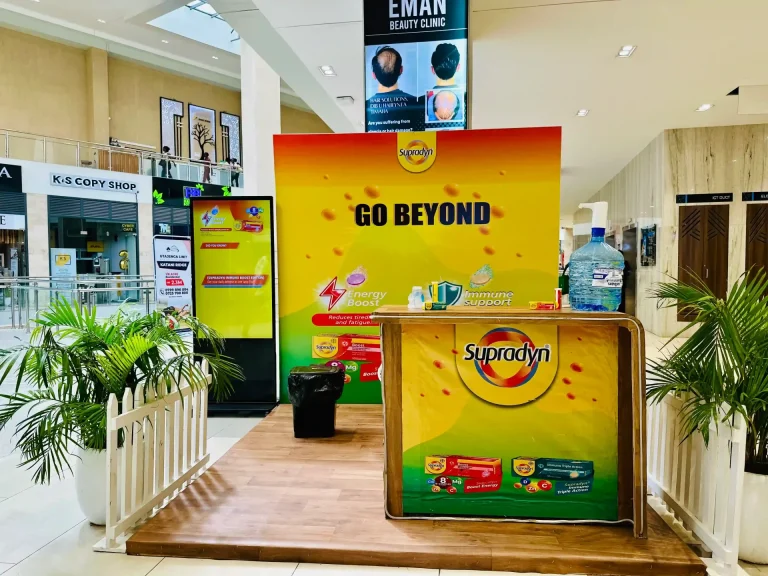
- Height and colour you can see from the escalator. A tall branded element or a light box does more than a long, low counter.
- One message, readable from three metres. Most mall stands try to say five things. Shoppers read one.
- An open front. A table across the whole front of the stand is a wall. Leave room to step in.
- An activity that takes less than a minute. A taste, a spin-the-wheel, a photo moment, a quick game on a screen. Longer activities are fine once someone has stopped.
- A reason to come back or to buy. A voucher redeemable in the supermarket, a code, an M-Pesa offer, an entry into a draw.
Interactive displays get a lot of attention in pitch decks. Touchscreens, augmented reality filters and photo booths can work very well, but only if they load fast, work offline and do not need a staff member to explain them every time. A simple game that works beats a clever one that freezes.
From experience: plan for the queue. If your activity takes two minutes and the stand is busy, you need somewhere for people to wait that does not block the walkway, or the mall will ask you to stop.
Mall rules, bookings and staffing
Every mall has its own terms, and they change. Before you design anything, get the following from the mall’s management in writing:
- The exact footprint, the floor type and any weight limits.
- Load-in and load-out times. Most malls want builds done outside trading hours, often late at night.
- Power available at the spot and whether you may bring a generator (indoors, almost always no).
- Sound limits, and whether an MC or live music is allowed at all.
- Rules on sampling food and drink, and whether the supermarket or tenants nearby must agree.
- Insurance, branding approvals and any deposit for damage.
If you are collecting phone numbers or emails, the Data Protection Act 2019 applies. Tell people what you are collecting it for, get clear consent and store it properly. A paper sign-up sheet left on a counter is a problem.
The people on the stand
Your brand ambassadors are the activation. Brief them on the product properly, not just the script. They should know the price, where to buy, the common objections and what to do when a child spills the sample. Plan shifts so nobody stands for eight hours, and have a supervisor on the floor, not in the car park.
Budget drivers and measuring results
We will not quote typical prices here because they vary too much by mall, season and build. These are the things that move the number most:
- Space rental, which depends on the mall, the location inside it and the dates. December and school holidays cost more.
- The build: a reusable modular stand costs more once and less over a multi-mall tour.
- Number of days and number of malls.
- Staff numbers, shift lengths and training days.
- Samples, giveaways and vouchers.
- Screens, sound, lighting and any content production.
For measurement, pick two or three numbers and track them every day: people engaged (sampled, played or spoke to staff), contacts or sign-ups collected with consent, and redemptions or sales linked to the activation through a code or till data. Add a short daily report with photos and staff notes on what shoppers said. That qualitative feedback is often the most useful part.
If you are comparing agencies to run this, our guide to choosing an experiential marketing agency covers what to ask, and the brand activation companies guide explains how activation firms usually work and charge.
Planning a launch in a mall?
Send us the product, the cities and the dates you have in mind. We will suggest malls and spots that fit, and tell you what the mall will need from you.
Quick answers
How far ahead should I book mall space in Nairobi?
Six to eight weeks is a sensible minimum for a normal weekend. For December, Easter or school holidays, start earlier, because the best atrium dates go first.
How long should a mall activation run?
For a launch, a single weekend can be enough. For sampling or sign-ups, most brands run several weekends or rotate through several malls so that the build cost is spread out.
Can we give out food or drink samples in a mall?
Usually yes, but the mall sets the rules and may need the supermarket or nearby tenants to agree. Confirm hygiene, waste and storage arrangements before you plan the stand.
How do we know if the activation worked?
Agree two or three daily numbers before you start, such as people engaged, consented sign-ups and redemptions of a code or voucher, and compare them with sales in nearby stores over the same period.