Guerrilla marketing is the small-budget, high-surprise end of BTL. A flash mob in a mall, a mural that appears overnight, a giant version of your product on a street corner. The idea is to get people talking and filming, so that the stunt travels much further than the spot where it happened. In Kenya it works well, provided you do not confuse “unconventional” with “unapproved”.
- Guerrilla marketing trades budget for surprise. The idea has to be strong enough that people share it.
- Most public-space tactics still need permission from the county, the property owner or both.
- The best stunts link to one simple action, such as a code, a hashtag with a prize, or a nearby place to buy.
- Plan for the backlash case. A stunt that annoys commuters or looks like vandalism can hurt the brand.
What guerrilla marketing is
The term was popularised by the American writer Jay Conrad Levinson in the 1980s, as a way for small businesses to compete with big advertisers through imagination rather than spending. Today it covers any unconventional, usually physical, marketing that surprises people in places they do not expect a brand.
It sits within below-the-line marketing, next to sampling, roadshows and in-store work. The difference is intent. A sampling team wants trial. A guerrilla stunt wants attention and conversation, which is why it pairs so well with social media.
It suits challenger brands, launches, youth audiences and any message that can be said in one picture. It suits less well a product that needs explanation or a brand whose customers value seriousness, such as some financial services.
Ten tactics that work in Kenya
- Murals and street art. Commissioned walls in high-footfall areas, painted by local artists, with the owner’s permission. They last for months and get photographed constantly.
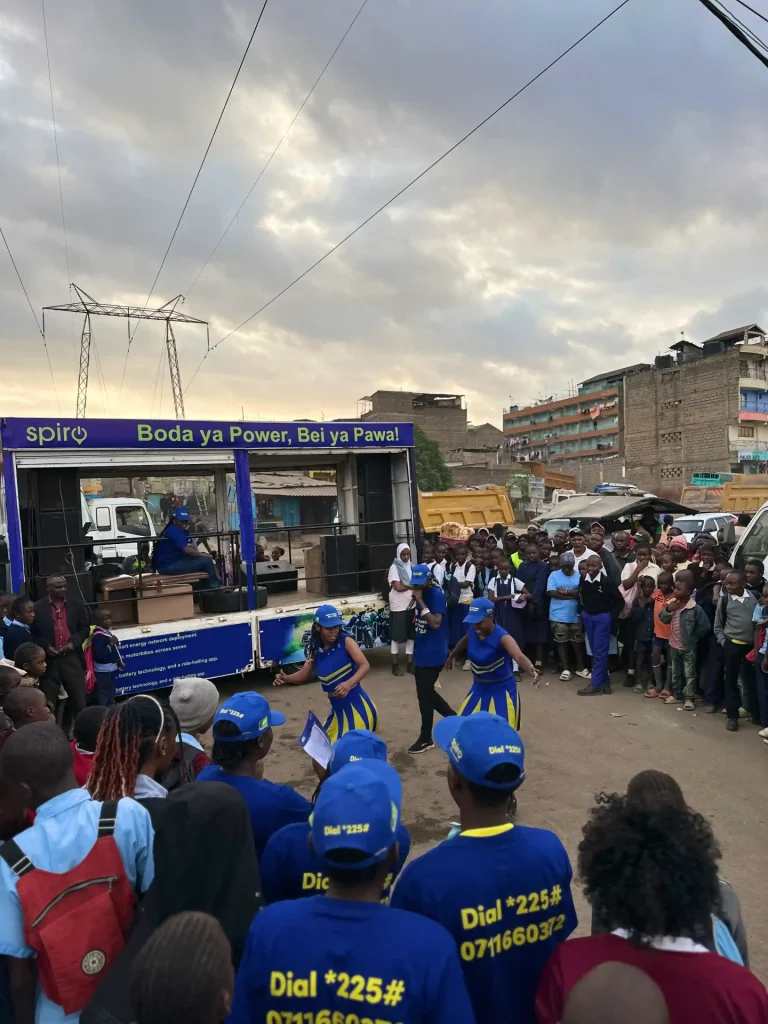
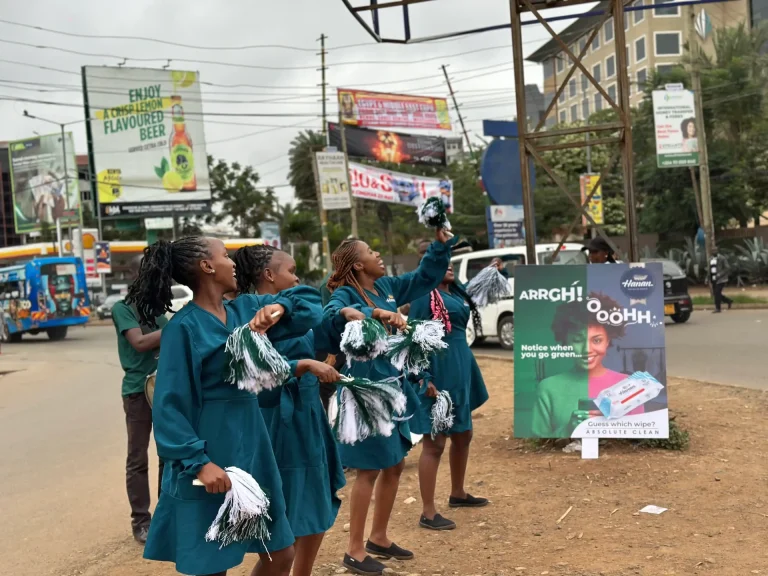
- Flash mobs. A choreographed performance that starts out of nowhere in a mall, a campus or a busy public space. Agree it with the venue first so security does not stop it halfway.
- Night projections. Projecting a message or video on a large wall after dark. Needs the building owner’s agreement and usually the county’s.
- Reverse graffiti. Cleaning a message into a dirty wall or pavement with stencils and water. Striking and cheap, though permissions still apply.
- Oversized products. A giant bottle, phone or packet placed where people pass. Simple and very photogenic.
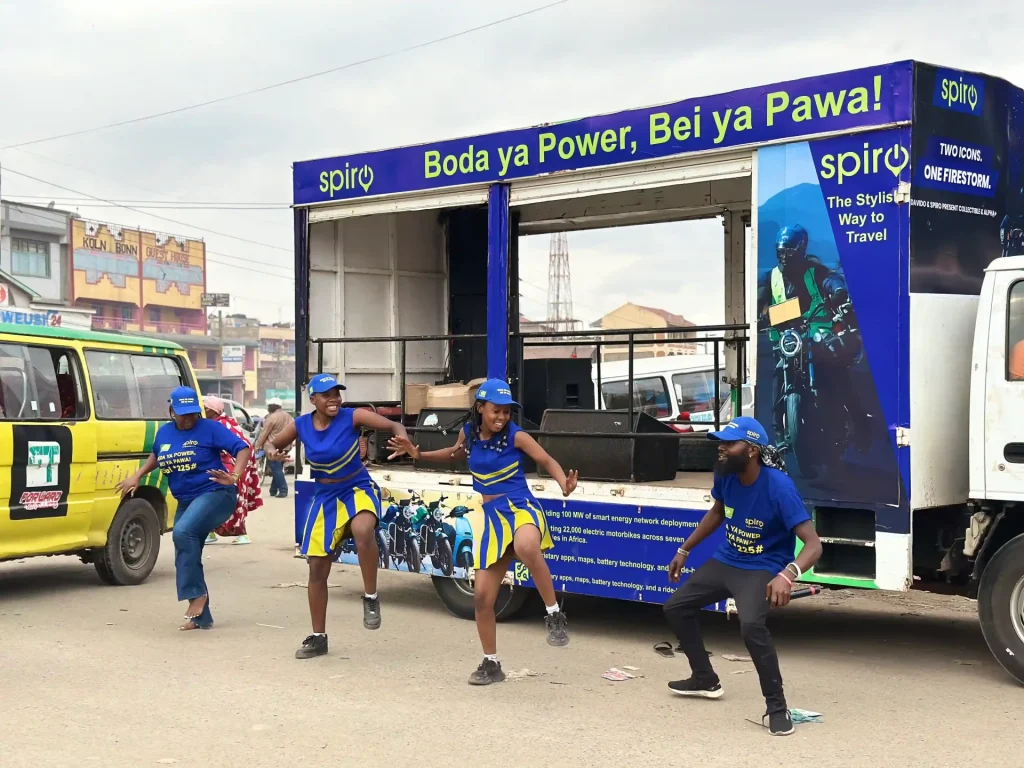
- Matatu moments. Branded matatus or on-board surprises on popular routes, agreed with the Sacco and operator. Matatu culture is a natural fit for bold creative.
- Campus stunts. A surprise challenge, game or giveaway at a university, agreed with the student affairs office.
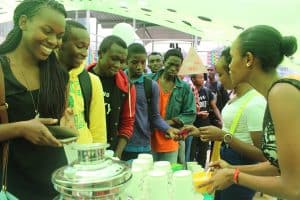
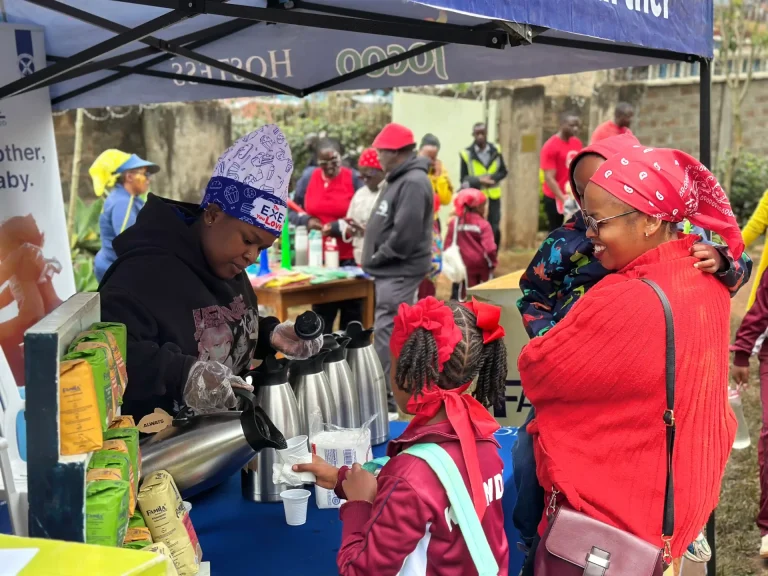
- Pop-up experiences. A stand, container or kiosk that appears for a day or two with something to try, then disappears.
- Street performances. Dancers, acrobats or mascots at busy junctions or squares, with a clear brand link.
- Offline-to-online challenges. A physical clue, code or object that sends people to a social challenge with a real prize.
| Tactic | Typical cost level | Main risk |
|---|---|---|
| Mural or street art | Low to medium | Painting without permission; poor placement |
| Flash mob or street performance | Low to medium | Stopped by security; crowd safety |
| Night projection | Medium | Permissions; weather; few people out at night in some areas |
| Oversized product or pop-up | Medium | Build quality; site approval; theft or damage overnight |
| Matatu or campus stunt | Low to medium | Partner approval; tone that misses the audience |
These are relative levels only, not prices. Costs depend on scale, location and production quality.
Permissions and where the line is
Guerrilla marketing has a reputation for breaking rules. In practice, the brands that get good results in Kenya do it with permission, because getting stopped halfway or fined is not good publicity.
- Public spaces and outdoor branding. Check with the county government. Temporary signage, wall branding and use of public spaces are usually regulated.
- Private property. Written permission from the owner for walls, buildings and land. Malls have their own rules on performances and filming.
- Environment. No litter, no fly-posting, no paint or chemicals running into drains. NEMA sets national environmental standards and counties enforce local rules.
- Music and performances. If you use recorded music in public, check licensing with MCSK, KAMP and PRISK.
- Other brands. Ambush marketing around another company’s event or sponsorship can lead to legal trouble. Avoid using others’ trademarks or implying a link that does not exist.
- Personal data. If a challenge collects phone numbers or entries, the Data Protection Act 2019 applies.
From experience: the stunts that go wrong are usually the ones where someone thought it would be easier to apologise later. In Kenya, a video of a security guard shutting down your flash mob will travel further than the flash mob.
Planning a stunt that pays off
Start with one idea and one action
Write the idea in one sentence and the action in another. “A giant version of our new bottle appears at five matatu stages. People photograph it and post with the hashtag for a chance to win a prize.” If you cannot say it that simply, the public will not get it either.
Plan the content capture
Much of the value comes from video. Have a photographer and videographer in place, plan the shots, and have content edited and posted within hours. A good stunt with no footage is a missed opportunity.
Seed it
Do not rely on strangers to share it. Have creators or brand ambassadors present to post first, and a social team ready to respond in comments. Keep it honest: creators should disclose that they are working with the brand.
Plan for the downside
Ask what happens if the public reads it the wrong way, if it rains, or if security stops it. Have a statement ready and a manager reachable. Avoid anything that blocks traffic or pavements, mocks a group, or could be mistaken for a real emergency.
Measure
Track views, shares, mentions, hashtag entries and press pick-up. Where you can, link it to something commercial: code redemptions, sign-ups or sales in nearby outlets over the following week.
Guerrilla tactics combine well with other formats. See our guides to roundabout activations, mall activations and experiential marketing services.
Have an idea that needs making real?
Send us the idea or just the objective. We will tell you what it takes to do it properly, with permissions, production and content capture planned in.
Quick answers
Is guerrilla marketing legal in Kenya?
The marketing itself is legal, but the tactics are not exempt from the rules. Public spaces, outdoor branding, noise and private property all need the right permissions from the county or the owner.
Is guerrilla marketing cheap?
It can cost less than mass media because it relies on surprise and sharing rather than paid reach. Production, permissions and content capture still cost money, so budget for them.
What makes a guerrilla stunt go viral?
There is no guarantee, but stunts that are simple, surprising, easy to film and relevant to the audience have the best chance. Seeding the first posts helps.
How do I measure guerrilla marketing?
Track views, shares, mentions and press coverage, and link the stunt to a commercial action such as a code, sign-up or nearby offer so you can see whether attention turned into results.